The Unseen City: Building a Visual Inspiration Board from Urban Textures
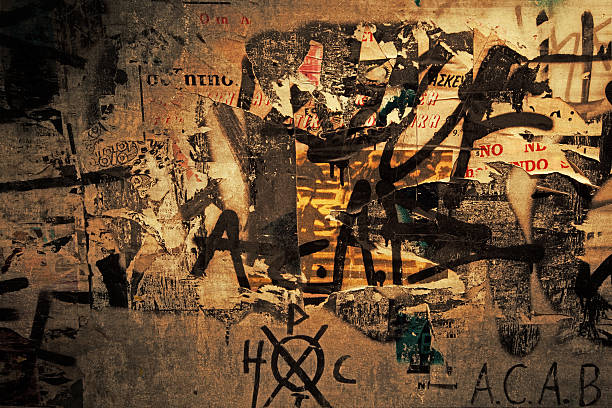
The best creative ideas rarely arrive from staring at a blank screen or waiting for a lightning bolt. They come from feeding your eyes with something unexpected. A visual inspiration board is a simple tool for doing exactly that: collecting images that stir something in you, without forcing a specific purpose. But the real trick is not just pinning pretty pictures off the internet. It is training yourself to see the raw material hiding in plain sight. One rich, overlooked source is the city itself, specifically the gritty, accidental textures most people walk past every day.
Think about the last time you really looked at a patch of old sidewalk. Not the clean concrete, but the cracked, stained section near a bus stop. The brownish yellow of dried chewing gum pressed into a pattern like a map of tiny islands. The black lines of tar used to seal cracks, now peeling into curled shapes that resemble calligraphy. That is a visual file you can use. A photographer might call it abstract texture. A graphic designer might see a repeating pattern for a background. A writer might find the starting point for a description of a forgotten street. The point is that ordinary urban decay holds as much creative fuel as a painting in a gallery, once you train your eyes to collect it.
To build a visual inspiration board from these sources, start with a simple rule: leave your phone out of it for the first pass. Walk a few blocks without any goal. Let your gaze drift from the ground to the walls to the sky. Notice where your eyes stop. Maybe it is the spiral of rust on an old metal grate. Maybe it is the way light hits a puddle after rain, turning a puddle into a mirror that splices a building at a strange angle. Those moments are your raw data. Take a photo of each one, but do not judge it. Capture it like a collector picking up a stone that caught the light, even if you do not know why.
Back at your desk, print those photos. Do not keep them digital only. There is something in the physical act of holding a picture that makes it stick differently in your mind. Pin them to a corkboard or clip them to a string with wooden clothespins. Then add a second layer: things you find on site. A piece of cardboard with a torn edge and a faded shipping label. A shard of colored glass rounded smooth by street grit. A leaf that has been partially eaten into a lace pattern. These objects are not beautiful in the museum sense. They are interesting in the way that a random splatter of paint on a brick wall is interesting. They carry a story you do not know, which leaves room for your imagination to fill in the blanks.
Now the board starts to talk back to you. Look for relationships between the items. The rust spiral and the lace leaf might share a similar curve. The tar calligraphy and the torn label might both use a broken line. Those visual echoes are the sparks that creativity feeds on. You are not searching for answers. You are building a vocabulary of shapes, colors, and textures that your brain can later reassemble into something new. A designer I know once pinned a photo of chipped paint on a fire escape railing, months later it became the pattern for a fabric line. A musician used the rhythm of a train crossing signal, captured as a series of blurry photos, to inspire a song tempo. The board is not a mood board with a theme. It is a free-association collection that makes no promises.
Keep changing the board. Every week or two, swap out a few pieces. Add something from a different part of the city. A market stall with stacked crates. A subway floor with gum spots arranged like constellations. A building facade covered in scaffolding that forms a grid of shadows and metal. The variety matters more than the quality of the individual images. You want enough difference to shake your brain out of its usual grooves.
The final step is to use the board as a remote control for your focus. When you are stuck on a creative problem, stand in front of the board and let your eyes wander for three minutes with no agenda. Do not try to solve anything. Just look. Often a shape or color will jump out and connect to the problem in a way you could not have forced consciously. That is the hidden power of visual stimuli collected without intention: they arrive as strangers, but leave as collaborators.
The city is a machine that generates infinite visual noise. Most of it is ignored. But when you treat that noise as raw material, you stop waiting for inspiration and start hunting it. A visual inspiration board built from urban textures is not about beauty. It is about noticing what is already there and letting it teach your eye a new way to see.
Articles