
The Unpaved Path: How Running on Dirt Trains Your Brain to Think Differently
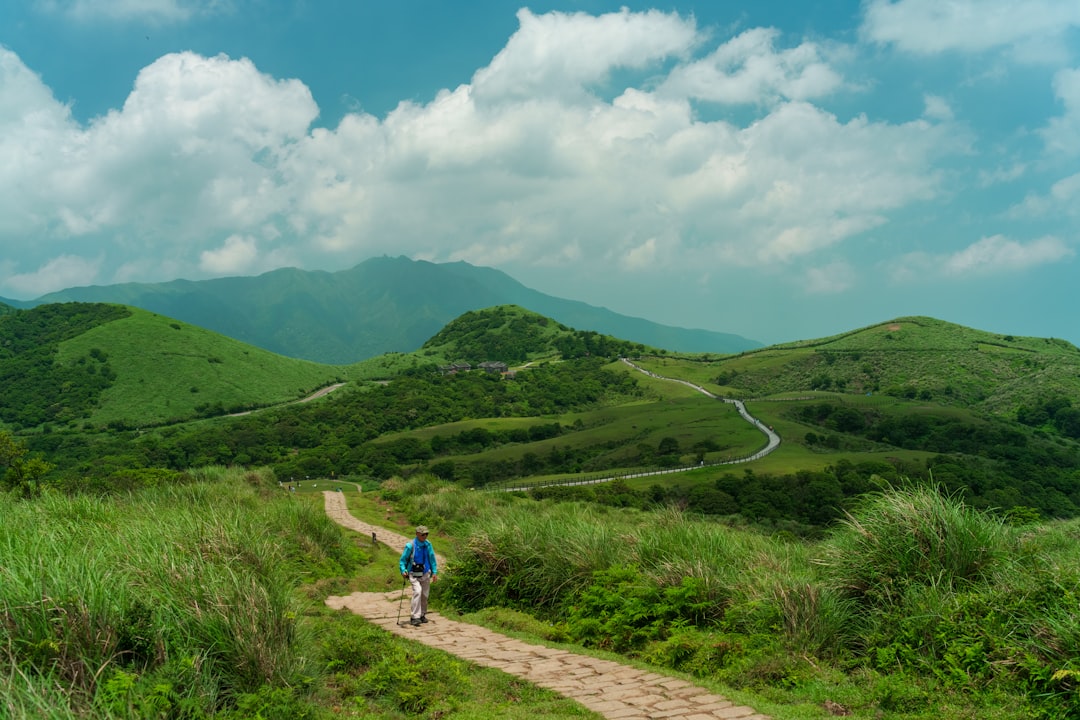
Most joggers stick to sidewalks, treadmills, or paved park loops because those surfaces feel safe and predictable. But if you are looking for a creativity boost, the smartest move you can make is to step off the asphalt and onto a dirt trail. Running or jogging outdoors on uneven, natural terrain forces your brain to operate in a completely different mode than it does on smooth, flat ground. That shift in mental gear is exactly what unlocks fresh thinking and surprising solutions to stubborn problems.
When you run on a paved surface, your brain can almost go on autopilot. The rhythm of your feet hitting the same hard, level ground is repetitive. Your mind wanders, but it often wanders in circles, circling back to the same worries or to-do lists. On a dirt trail, everything changes. Every few steps you have to adjust your stride for a rock, a root, a patch of mud, or a sudden incline. Your eyes scan the path ahead constantly. Your feet shift micro-millimeters to find stable footing. This continuous, low-level decision-making keeps your prefrontal cortex—the part of your brain responsible for problem-solving and focus—actively engaged without overwhelming it. The result is a state of “active rest” where your conscious mind is occupied with the immediate task of running while your subconscious mind is free to make novel connections.
This is not a mystical state. It is a practical consequence of how attention works. When you are on a smooth road, your brain has too much idle capacity, so it turns inward and recycles old thoughts. On a trail, your brain has just enough to do to stay present, but not so much that it cannot pull up distant memories or unrelated ideas. Think of it like a juggler who keeps three balls in the air. If the balls are all identical and the rhythm is constant, you get bored and drop them. If the balls come at different angles and speeds, you have to stay alert, and in that alertness you might suddenly notice a new pattern you never saw before.
Another reason running on natural terrain boosts creativity is the unpredictability of the environment itself. A paved path offers a fixed set of visual inputs: the same light poles, the same benches, the same stretch of grass. A dirt trail changes from season to season and even from day to day. A fallen branch you dodged yesterday might be gone tomorrow, replaced by a fresh stream of rainwater. These small surprises force your brain to update its internal map of the world. That updating process, known in everyday terms as “learning on the fly,” is the same mental muscle you use when you try a new approach to a project or reconsider an assumption about a problem. By running on variable terrain, you are literally practicing flexibility. Your brain gets better at pivoting, at letting go of one plan and quickly forming another. That skill transfers directly to creative work, where the best ideas often come from abandoning a dead-end line of thought and shifting to a better one.
The physical demands of trail running also change the way you breathe and move. On a flat sidewalk, your breathing is steady and shallow. On a trail, when you charge up a hill or step carefully down a rocky slope, your breath deepens and your heart rate varies. This variation in physical effort stimulates the release of natural brain chemicals like dopamine and endorphins, which are linked to positive mood and enhanced creative thinking. But the more important effect is the break in rhythm. Creativity thrives on disruption. A steady, monotonous activity like a treadmill run can lull your brain into a trance that feels relaxing but rarely produces new ideas. A trail run, with its constant changes in pace, gradient, and surface, forces your brain to constantly re-calibrate. Those tiny disruptions are like mental resets. Each time you regain your balance after a tricky step, your brain gets a fresh burst of alertness. That alertness is the breeding ground for insight.
You do not need to run a marathon or tackle a dangerous mountain trail. A twenty-minute jog through a local park that has a unpaved section, a beach with packed sand where the footing shifts, or even a muddy field behind a school will do. The key is to give your brain a surface that demands active engagement. Avoid listening to music or podcasts. Let the crunch of leaves, the sound of your own breathing, and the texture of the ground under your feet become the only inputs. You will find that your thoughts start to flow differently. Solutions to problems you have been wrestling with will appear, sometimes out of nowhere, like a shortcut you did not know the path had.
The next time you feel stuck on a creative challenge, lace up your shoes and find the roughest, most uneven ground you can. Your brain is waiting for that little bit of instability to spark something new.
Articles