
The Unlikely Doorway: How a Fixed Creative Hour Expands Your Experience
Many people believe that creativity thrives on chaos, on being ready for inspiration at any moment, on traveling to exotic places or waiting for a lightning bolt of insight. Yet for countless artists and innovators, the real secret is not spontaneity but structure. Setting aside the exact same time every day to work on your craft might sound like the opposite of exploring new experiences, but it often becomes the most reliable path to them. Think of it as a train track. Once the track is laid, the train can take you anywhere.
When you commit to a consistent creative time, you remove the endless negotiation with yourself. You stop asking “Should I work now?“ and simply work. This frees up a huge amount of mental energy. That energy can go into noticing the unexpected. Instead of worrying about when inspiration will strike, you are already there, ready to receive it. The writer Ray Bradbury once said that he would type a story that was “waiting for me” each morning. He didn’t wait for a muse; he showed up at the same hour, and the muse had no choice but to meet him.
But how does this connect to exploring new experiences? At first glance, a repetitive schedule seems closed and limiting. Yet the act of showing up at the same time forces you to dig deeper into the same well. It pushes you past the first obvious ideas that your brain offers. Psychologists call this the “novelty of the surface” and the “familiarity of the deep.“ The first ten minutes of any creative session produce the same old thoughts. Only after you sit through that boring period does your mind start to wander into unfamiliar territory. A consistent time strips away the excuse of “I’m not in the mood” and leads you to a different kind of experience: the experience of your own mind when it is forced to get quiet.
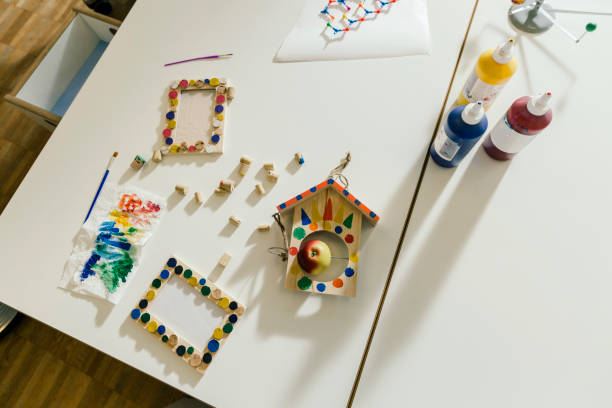
Consider a painter who sets up her easel at 7 a.m. every day. At first, she might paint the same apple in the same chair. But after a week of that routine, she notices how the light changes at 7:15. She sees a shadow that wasn’t there the day before. The routine becomes a microscope for observation. Similarly, a musician who practices at a fixed hour begins to hear tiny variations in his own playing that he normally would miss. The consistent time sharpens your ability to perceive novelty in the ordinary. That is a new experience in itself—not found by traveling to another country, but by staying still long enough.
There is also the effect of deadline energy. When you know you have exactly one hour, say from 9 to 10, you become more decisive. You try things you wouldn’t normally try because you have no time to second-guess. This willingness to take risks is a hallmark of exploring. The fixed time acts like a playground fence: it keeps you safe, but within that safety you can swing higher and run faster than you ever would in an open field.
Another important point is the brain’s association. After several weeks of consistent creative time, your mind begins to treat that hour as a trigger. Just sitting down at the same desk, with the same coffee cup, sends a signal that it is time to explore. This is not a mystical concept; it is a simple habit loop. But the creative class might reject the word “habit” because it sounds boring. So call it a “launch pad.“ Your daily creative time is a launch pad for unexpected journeys. The rocket stays on the pad for a while, but once ignited, it can go to any star.
To make this work, choose a time that is realistic and defend it fiercely. It does not have to be morning. It could be early evening, or even late night. The key is consistency. During that time, do not check the phone, do not answer messages. Let your mind roam. Let it be bored. Boredom is not the enemy of creativity; it is a doorway to new experiences. In our world of constant distraction, sitting with your own thoughts for an hour is a radical act. It is the most unexplored territory you will ever find.
So if you want to boost your creativity, stop waiting for the perfect trip or the perfect mood. Start a daily meeting with yourself. Set a consistent creative time, and watch how that small, ordinary action unlocks a lifetime of extraordinary experiences. The routine is not the cage. The routine is the key.
Articles