The Unexpected Creative Power of Desert Landscapes
When most people think about natural settings that boost creativity, they picture lush forests, roaring waterfalls, or serene beaches. But there is another environment that offers something entirely different for the creative mind: the desert. At first glance, a desert might seem barren and uninspiring—a place of emptiness, heat, and repetition. Yet for anyone looking to break through a creative block, the desert can be one of the most powerful tools in your environment-changing arsenal.
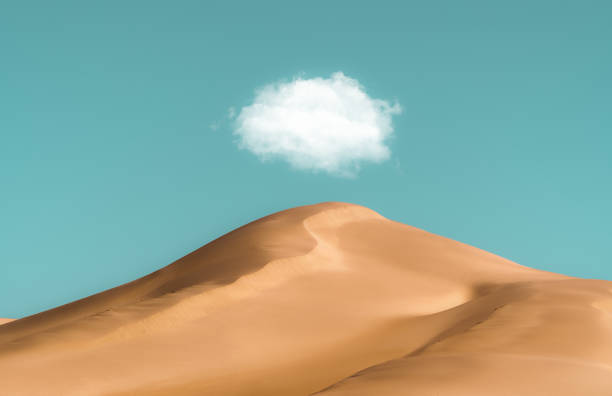
The key lies in what the desert lacks. In modern life, we are surrounded by constant visual noise—screens, signs, cluttered rooms, traffic, and endless notifications. Your brain spends most of its waking hours filtering out irrelevant stimuli just to focus. That filtering work uses a surprising amount of mental energy. When you step into a desert, the visual input drops dramatically. There are no billboards, no shelves of products, no endless rows of buildings. Just sand, rock, sky, and the occasional shrub. This reduction in sensory input gives your brain a break, freeing up cognitive resources that can be redirected toward making new connections.
The silence of the desert is equally important. It is not a dead silence but a living one—the whisper of wind across dunes, the scuttle of a lizard, the far-off cry of a hawk. These sounds are infrequent and low in volume, which means they do not demand your attention the way a city’s hum or a coffee shop’s chatter does. Instead, the quiet allows your inner monologue to surface. Many creative people report that their best ideas come when they are not trying to think at all. The desert’s stillness makes it easy to let your mind wander, to daydream, to follow a stray thought without interruption. That kind of unstructured, unforced thinking is the breeding ground for originality.
Then there is the sheer scale of a desert landscape. Staring out across an endless horizon, you are reminded of how small you are and how big the world is. That perspective shift can do wonders for a stuck creative project. What seemed like a monumental problem—a blank page, a design flaw, a missing piece in a narrative—suddenly looks more manageable. The vastness also encourages you to think in broader terms. Your mind naturally begins to ask bigger questions, to consider patterns instead of details, to step back from the trees and look at the whole forest, or in this case, the whole desert. For a sculptor, painter, writer, or product designer, that kind of big-picture thinking is essential when you have been buried in minutiae.
The physical experience of the desert also plays a role. Walking on sand forces your muscles to work differently, which can help release physical tension that has built up from hours hunched over a desk. The dry heat and bright sunlight stimulate your body in ways that can improve alertness and mood. Many artists and thinkers have historically sought out desert environments for these very reasons. Georgia O’Keeffe spent decades in the New Mexico desert, and her paintings are a direct result of that landscape’s stark beauty and unique light. The writer Edward Abbey produced some of his most vivid work while living in the arid canyons of the Southwest. They did not go to the desert to find answers—they went to find new questions, and the answers followed.
You do not need to journey to the Sahara or Death Valley to get this effect. Any large, open, relatively barren space can offer a hint of desert psychology. A dry riverbed, a high-altitude plateau, a vast expanse of sagebrush, or even a big empty field on a windy day can trigger the same shift in perspective. The trick is to go without a plan. Do not bring a notebook, a camera, or a phone. Just walk. Let your eyes rest on the distant horizon. Notice the way light changes across the rocks. Listen to the wind. After a while, you will likely find that ideas start to appear on their own, unbidden, like mirages in the heat.
The desert works because it does not compete with your creative process. It does not try to dazzle you with beauty or distract you with activity. It simply exists, and in that existence, it gives you room to exist as well. For anyone stuck in a creative rut, a few hours in such a place can be more productive than a week of forced brainstorming. The next time your well runs dry, consider heading for the nearest patch of open, empty land. You might be surprised by what you find there.
Articles