The Strategic Use of Empty Space on Your Desk
Most people think a productive workspace needs to be full. Full of sticky notes, full of reference books, full of that inspirational figurine, full of pens and chargers and coffee cups. The impulse is to pack every square inch of your desk with tools, trinkets, and reminders of what you need to do. But there is a different approach, one that hinges on something you rarely consider: empty space. By deliberately leaving certain areas of your desk completely clear, you can trick your brain into thinking more freely and generating ideas you would not otherwise find.
The logic is simple. Your brain associates clutter with demands. Every object on your desk is a visual reminder of a task, a deadline, or a distraction. When you look at a pile of papers, your mind subconsciously registers unfinished work. When you see a stack of books, you feel the pressure to read them. When you have a dozen sticky notes staring at you, your attention fractures. This constant low-level stress uses up mental energy that could otherwise go toward creative thinking. By clearing a significant portion of your desk, you remove those demands. Your brain gets a moment of quiet, and in that quiet, original thoughts have room to surface.
But empty space is not just about reducing clutter. It is about creating a visual blank canvas. Artists and designers know that a blank page invites new marks. A blank wall invites a painting. A blank expanse on your desk invites your mind to wander. You can use that empty zone as a physical holding area for the next big idea. When you are stuck on a problem, push everything else aside and place a single blank sheet of paper or a plain notebook in that empty area. Now your eyes have nowhere to go except that open space. That focus can trigger a different kind of thinking. Instead of your gaze bouncing from object to object, it settles. Settling leads to deeper contemplation.
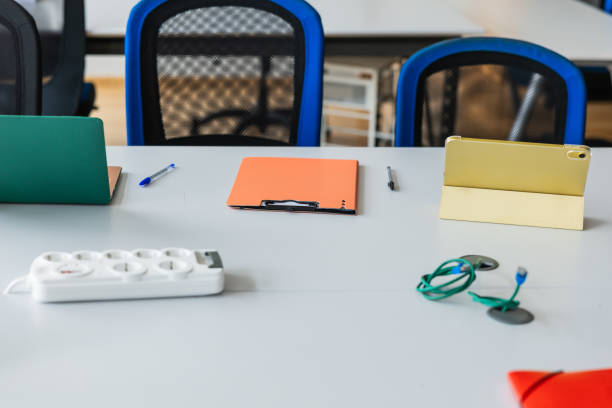
Another practical way to use empty space is to designate a specific zone on your desk that is always clear. Perhaps the left side of your desk is reserved for your computer and your current task. But the entire right side, maybe a third of the surface, stays empty. That zone becomes your thinking pad. You do not put anything there unless it is directly related to the idea you are working on. If you need to sketch something, you do it there. If you need to doodle while on a call, you do it there. If you need to place a single object that sparks a connection, you put it there and then remove it after. The zone remains a temporary landing pad for inspiration, never a permanent storage space.
This approach also helps when you need to switch modes. Creative work often requires rapid shifts between generating ideas and executing them. A cluttered desk blurs those modes. Everything looks the same. But if you have a clear zone, you can physically move your attention from your execution area — where you are writing code, editing text, or analyzing data — to your creative zone. This physical shift signals to your brain: we are now in idea mode. The empty space acts as a ritual boundary. Without saying a word, it tells you that the rules have changed.
Of course, you do not have to keep your entire desk barren. The idea is balance. You need your tools within reach. You need your computer, your phone, your notebook, your favorite pen. But you also need areas that are visually and physically free. Think of it like a good photograph. A photograph works because of negative space around the subject. That negative space gives the subject importance and clarity. Your desk works the same way. The empty space gives the important objects — and your thoughts — more weight.
If you are skeptical, try an experiment for one week. Clear off at least one third of your desk. Put everything that does not have an immediate use into a drawer or a box. Leave that area bare. Then, whenever you feel stuck, move your work into that empty zone. Do not allow yourself to pile anything on top of it. Keep it as a sacred void. You might be surprised how often a solution appears when your eyes have nowhere else to look but at nothing.
The best creative minds have long understood that less is often more. They clear their physical space to clear their mental space. A desk with deliberate empty pockets is not a sign of laziness or lack of ideas. It is a deliberate design choice. It is a tool for generating the very ideas you seek. So before you buy another organizer or another inspirational poster, try taking things away. Let the empty space do the work. Your next breakthrough might be waiting in the quiet spot right in front of you.
Articles