The Rubber Duck Method: Why Explaining Your Project Aloud to an Inanimate Object Boosts Creativity
You have a brilliant but messy idea for a new design, a story, a business model, or a piece of music. You have been wrestling with it in your head for days. It feels foggy and stuck. You think you know what you want, but every time you try to push forward, you hit a silent wall. The solution is not to think harder. The solution is to talk to a rubber duck.
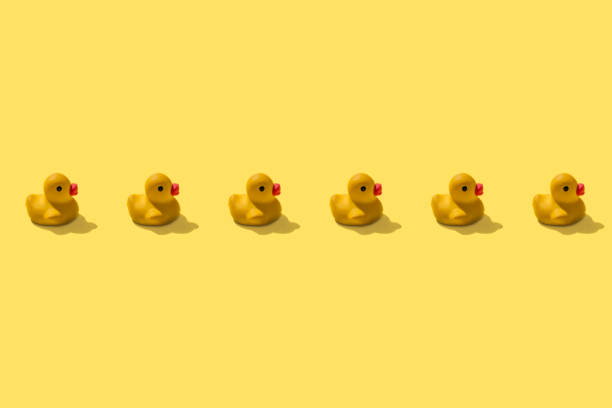
The rubber duck method comes from the world of software debugging, where programmers keep a small plastic duck on their desk. When a piece of code is broken and they cannot find the bug, they explain the code line by line to the duck. Out loud. The duck does not reply, does not judge, and does not know anything about code. But something about the act of speaking forces the programmer to articulate assumptions they were holding only in silence. The gaps become obvious. The bug is found. The same principle applies directly to any creative project.
When you explain your project aloud to an inanimate object, you are not asking for feedback. You are forcing your brain to translate swirling, incomplete thoughts into a linear stream of words. Your internal monologue is fast, lazy, and full of leaps it does not bother to justify. Spoken language is slower. It demands sequences. It requires you to finish a sentence before starting the next. In that slower pace, the missing pieces present themselves. You will, for the first time, hear where your reasoning is hollow. You will notice that you have been assuming something that you never actually checked. The duck does not tell you this. Your own voice does.
The beauty of the object is that it eliminates the pressure of a human listener. When you explain something to a colleague or a friend, even a supportive one, you start editing yourself. You worry about sounding half-baked. You skip over the parts that feel uncertain. You try to present a polished version, which defeats the purpose. The rubber duck, or a houseplant, or a chair, or a recording device that you will delete, has no expectations. You can be ugly, fragmented, and honest. You can say “I don’t actually know why this scene needs to happen” and then, because you are speaking, you realize that it doesn’t need to happen at all. That is a breakthrough the duck gives you for free.
This technique works especially well when you are in the middle of a project and feel creatively constipated. You know the structure is off, but you can’t see where. You have written three versions of the same paragraph and hate them all. You have sketched ten thumbnails and none of them sing. Stop staring at the page. Turn to your duck. Start at the beginning and describe what you are trying to accomplish, as if the duck knows nothing about your field. Use plain language. Do not assume that the duck understands “a more dynamic composition” or “a third-act pivot.” Explain what those phrases actually mean in terms of specific choices. The duck will not laugh at your oversimplifications. It will only force you to be concrete.
Many creative professionals report that explaining their project aloud to a non-expert, or to an empty room, reveals the core premise that they had been burying under decoration. A graphic designer once told me she kept adding textures to a logo because she thought it looked flat. When she explained the logo’s purpose to a cactus on her desk, she heard herself say, “It just needs to communicate trustworthiness, not look like a scarf.” She deleted the textures and the logo worked. The duck did not tell her that. The act of saying it out loud removed the clutter from her thinking.
To make this practice a habit, you do not need to buy a rubber duck. You can use any object that sits reliably in one place. I have used a coffee mug, a doorknob, and once a jar of pickles. The object is a prop. The real device is your voice. Stand up if you can. Walking while talking activates a different part of your brain and increases the flow of ideas. Record yourself if it helps, but do not listen back immediately. The moment of insight often happens during the speaking, not during the replay. You will know you have found something when you interrupt yourself mid-sentence with an “Oh, that’s why” or “Wait, that doesn’t make sense at all.” That is the duck doing its job.
Some people worry that talking to an object feels silly or unprofessional. It is both. The silliness is the point. Creativity thrives when you lower your defenses. If standing in front of a potted plant and narrating your film script makes you feel like a child playing pretend, that is exactly the state of mind that unlocks the best ideas. The duck does not require you to be clever. It requires you to be clear. And once you are clear, the next step becomes visible.
Try it today. Take your most tangled project. Find an object that will not talk back. Then start talking. The duck is waiting.
Articles