The Power of Unchoreographed Movement: How Free-Form Dancing Triggers Creative Insight
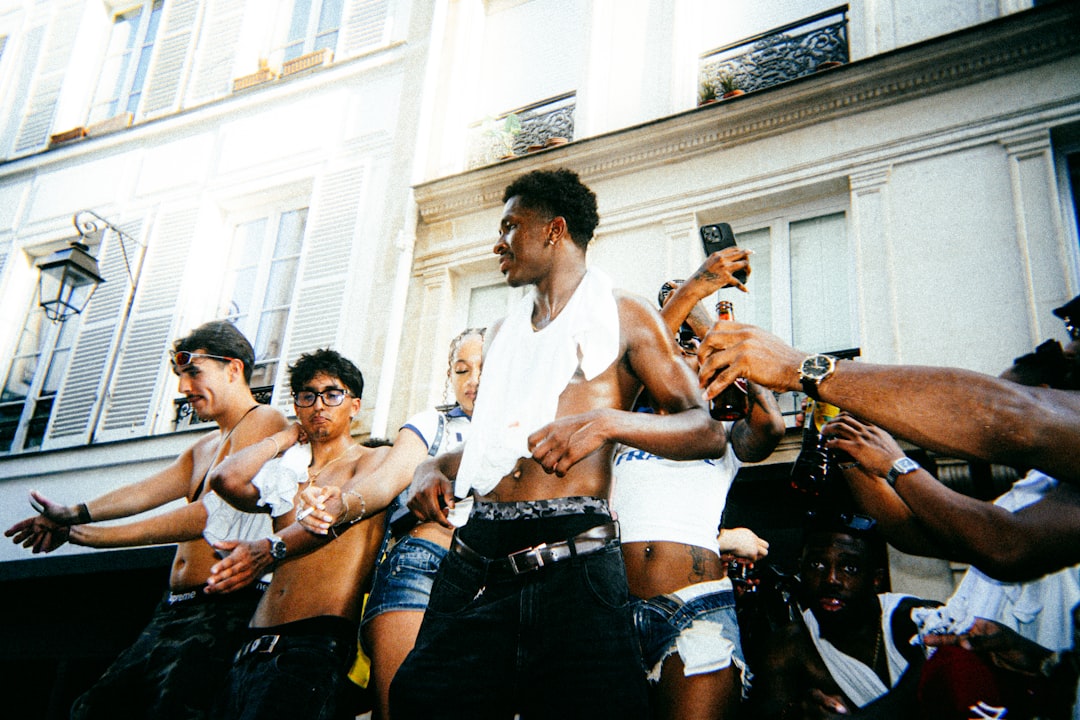
There is a moment in every dancer’s private practice when the music takes over, and the body stops trying to be clever. Steps become irrelevant. Technique dissolves into sensation. You might find yourself swaying in a way that feels ridiculous, or spinning until the room blurs, or just standing still with one arm lifted as if reaching for something invisible. This specific kind of movement—unplanned, unstructured, fully surrendered to sound—is one of the most direct paths to creative breakthroughs. And you do not need any dance training to access it.
The relationship between free dancing and creativity is not mystical. It is mechanical. When you move your body in ways that are not rehearsed, your brain is forced to invent new coordination patterns on the fly. Every muscle, joint, and nerve must negotiate a sequence it has never tried before. This process of real-time problem solving mirrors the way creative ideas are formed: by linking previously unrelated pieces of information into something novel. The difference is that dancing does this in the physical world, where you can feel the connections happening in your spine, your hips, your breath.
Consider what happens when you dance freely to a piece of music, particularly a track you have never heard before. Your ears receive a pattern of rhythm and melody. Your feet begin to tap, then your shoulders swing. But there is no internal choreographer telling you what comes next. The next movement is born from the gap between the beat you just heard and the beat you anticipate. That gap is a tiny, creative decision. If you do it repeatedly for three minutes, you will have made hundreds of small creative choices, each one building on the last. You are essentially improvising with your body the same way a jazz musician improvises with a saxophone.
That improvisation muscle is the same one that helps you generate fresh ideas at a desk or in a studio. When you are stuck on a problem, the default instinct is to think harder. But thinking harder often means thinking in circles, repeating the same neural pathways. Getting up and moving without a plan scrambles those pathways. The physical unpredictability forces your brain to release its grip on logic for a moment. In that release, you make space for associations that would never surface while you were sitting still, staring at a blank page.
There is also a timing element. Music imposes a tempo, and when you dance freely you entrain your body to that tempo. Entrainment is a fancy way of saying your internal rhythms—your heartbeat, your breath, even the electrical firing of your neurons—begin to synchronize with the external pulse. Many studies have shown that moving to a steady beat can shift brainwave activity from a focused, analytical state to a more diffuse, associative state. That diffuse state is where hunches live, where half-formed ideas bubble up and start to connect without your conscious interference.
The social aspect matters less than you might think. Dancing alone, in private, without any judgment or mirror, produces the richest creative rewards. When no one is watching, the pressure to look good disappears. You can make faces, flap your arms like a bird, crawl on the floor, or shake a single finger for an entire verse. These actions feel silly if described, but they are valuable creative experiments. They prove that your body can do things your mind never suggested. The more you allow yourself to be physically ridiculous, the more you train your brain to accept absurd ideas as valid raw material for creation.
Think of the dancers you admire—not the ones who perform perfectly rehearsed routines, but the ones who seem to disappear into the music. That disappearance is the goal. When your conscious mind steps aside, your body takes over as a generator of possibilities. Every sway, every bounce, every sudden stop is a prototype. Most of these prototypes will lead nowhere. But one of them, maybe the move you do when the bass drops and you throw your arms out to the side, will feel exactly right. That feeling of rightness is not just physical satisfaction. It is a creative insight, translated into motion.
To use this technique effectively, do not think of it as exercise or as a break from work. Approach it as a deliberate creative tool. Pick a song that you know well or one you have never heard. Close the door. Turn off the lights if it helps. Start moving in whatever way feels natural, then let go of doing what feels natural. Deliberately move in ways that feel unnatural. Extend a limb in an unlikely direction. Change tempo. Stop entirely for a few beats and feel the silence. Then start again. The goal is not to produce a dance. The goal is to produce a state of mind that is receptive to new connections.
After ten minutes of free dancing, sit down with whatever project you are working on. Do not try to force a connection between the dance and the work. Just write, sketch, or type whatever comes to mind, even if it seems unrelated. You will often find that the physical looseness translates directly into mental looseness. The idea that was stuck will come unstuck. The phrase that felt wrong will rearrange itself. The visual that was muddy will gain clarity.
Free-form dancing does not require skill, cost, or equipment. It requires only a willingness to be awkward. And that willingness is itself a creative act. By moving without a map, you prove to yourself that you can generate something out of nothing. That proof is the engine of every creative endeavor.
Articles