The Hypnagogic State: Your Mind’s Secret Gateway to Creativity
Imagine that moment just as you’re drifting off to sleep. Your thoughts begin to loosen, reality softens at the edges, and the line between imagination and perception starts to blur. You might see fleeting, dreamlike images against the darkness of your closed eyelids, hear a fragment of a nonsensical phrase, or feel a sudden, abstract idea float into your awareness. This is not quite dreaming, and it’s certainly not being awake. This is the hypnagogic state, a unique and fertile mental twilight that has been a hidden wellspring for creative minds for centuries.
The hypnagogic state is the transitional period of consciousness that occurs as you move from wakefulness into sleep. It is the mind’s gentle descent, a threshold where the logical, structured thinking of the day begins to relax its grip, making room for the more fluid, associative, and visual language of the subconscious. Think of it as the mental equivalent of a door being left slightly ajar between two rooms—one brightly lit and orderly (your waking mind), and the other dark, mysterious, and full of unexpected connections (your sleeping mind). In this in-between space, the usual rules are suspended, allowing for a kind of mental alchemy that is incredibly valuable for creative work.
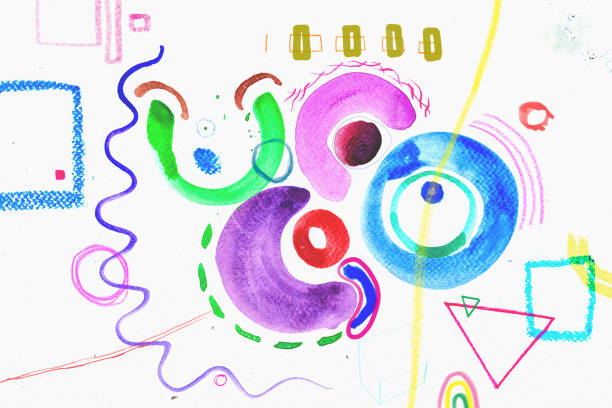
This state is accessible to everyone, a natural part of the human sleep cycle that we pass through each night, though often without noticing. Its defining characteristic is its blend of waking awareness and dreamlike sensation. You are still somewhat conscious and can often observe the experience, yet you have little control over the strange, spontaneous content that arises. These “hypnagogic hallucinations,” as they are sometimes called, are not frightening or intense like some dreams; they are more like whispers from a deeper part of your mind. They can be visual—swirling patterns, faces, or landscapes. They can be auditory—a voice saying your name, a melody, or a sentence that makes no logical sense but feels profound. Most importantly for creativity, they can be conceptual—a sudden solution to a problem you’ve been wrestling with, or a novel connection between two seemingly unrelated ideas.
History is filled with stories of creators who deliberately harnessed this state. The inventor Thomas Edison was famous for this practice. He would sit in a chair holding steel balls in his hands, with metal plates placed on the floor below. As he drifted into the hypnagogic state, his muscles would relax, the balls would drop, clang on the plates, and wake him. He would immediately jot down the ideas or images that had just flooded his mind. The surrealist painter Salvador Dalí used a similar method, calling it “slumber with a key.” He would nap in a chair with a heavy key in his hand, positioned over a metal plate. The moment sleep took the key from his grasp, the clatter would pull him back, and he would sketch the bizarre, melting landscapes he had just glimpsed. These artists weren’t just napping; they were actively fishing in the rich, untapped waters of their own minds.
For the modern creative person, the hypnagogic state offers a powerful, natural tool to break through blocks and find inspiration. The reason is simple: it temporarily quiets the inner critic and the analytical editor that often stifle new ideas during the day. When you’re in this drowsy, semi-conscious state, judgment is offline. Wild combinations, illogical leaps, and raw, unpolished concepts can surface without being immediately dismissed as silly or impractical. It is in this non-judgmental space that truly original thoughts are often born, because they are free from the constraints of conventional thinking.
Cultivating access to this state doesn’t require special training; it requires attention and a bit of patience. The key is to develop a gentle awareness as you begin to fall asleep. Many find it helpful to lie down in a quiet, dark room when they are tired but not exhausted, and simply pay attention to the space behind their eyelids or the flow of their thoughts without trying to direct it. Keeping a notebook or a voice recorder by the bed is essential, as these impressions are famously fragile and evaporate like mist upon full waking. The goal is not to fall completely asleep, but to linger in that delicious, fertile borderland.
Ultimately, the hypnagogic state is a reminder that some of our best creative work is done not by forcing an idea, but by allowing it to arrive. It is a built-in feature of our biology, a nightly invitation to explore the vast, uncharted territory of our own imagination. By learning to recognize and value this brief window, you can tap into a direct line to the associative, pattern-making, and profoundly inventive part of yourself that is usually just out of reach. It is, in every sense, a secret gateway—and the key is already in your mind.
Articles