
The Hidden Trap of Expertise: How Unlearning Can Unlock Creative Breakthroughs
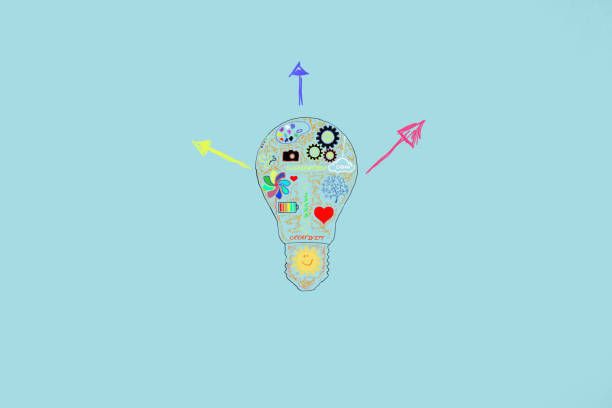
Most people assume that the more you know about a subject, the better you become at producing original work in that field. Experience gives you speed, efficiency, and a deep mental library of solutions that have worked before. But there is a dark side to mastery that rarely gets discussed. The very knowledge that makes you an expert also builds invisible walls around your thinking. You start seeing problems only through the lens of what you already know. You stop noticing the gaps, the oddities, the possibilities that don’t fit your mental map. If you want to boost your creativity, one of the most powerful moves you can make is to deliberately unlearn parts of what you think you know.
Think about how a seasoned chef approaches a new ingredient. She has a thousand recipes in her head. She knows which spices pair with which proteins, which cooking methods bring out the best texture, which flavor profiles are considered balanced. That expertise allows her to produce reliable, high-quality meals every time. But it also makes it nearly impossible for her to treat that ingredient as a completely unknown thing. Her brain automatically categorizes it, compares it to everything she has cooked before, and slots it into a pre-existing framework. She never gets to experience the ingredient with fresh eyes. The same happens to a graphic designer who has mastered a certain style, a programmer who knows the best algorithms, or a songwriter who has memorized every chord progression. Expertise turns into a filter that blocks out anything that doesn’t match your internal patterns.
To break this trap, you have to force yourself into situations where your expertise is useless. That is the core of challenging your own assumptions. It is not about thinking differently inside your head. It is about changing the external conditions so that your old habits no longer apply. One simple technique is to swap your tools. If you are a painter, try drawing with your non-dominant hand. If you write on a keyboard, try handwriting with a fountain pen. If you cook with gas, try using only a microwave for a week. The awkwardness forces your brain to abandon its automatic routines and start solving problems from scratch. You will make mistakes. You will produce ugly results. But somewhere in that clumsiness, you will stumble on a move that your expert mind would never have considered.
Another method is to flip a core assumption of your craft upside down. If you are a designer, assume that the most important element should be the smallest. If you are a musician, write a song using only notes that are normally considered wrong for the key. If you are a writer, try telling a story without using any adjectives. These constraints do not just make things harder. They reconfigure the problem space entirely. Your usual solutions no longer work, so you have to invent new ones. That invention is where creativity lives. The assumption you are challenging might be something you never even realized was an assumption. It was just “the way things are done.“ By breaking that rule and seeing what happens, you open a door to a different way of thinking.
You can also challenge your assumptions by changing the environment you work in. If you always sit at the same desk, go work in a busy cafe, a library basement, or a park bench. The unfamiliar sensory input will disrupt your mental patterns. Or try working without any digital tools for a day. No search engine, no spellcheck, no calculator. Suddenly you have to rely on memory, estimation, and manual processes. The friction slows you down and makes you pay attention to details you normally skip. These small disruptions may feel uncomfortable at first, but discomfort is a sign that your brain is being forced out of its ruts.
Perhaps the most effective way to challenge your own assumptions is to deliberately take on a project in an area you know nothing about. If you are a photographer, try writing a poem. If you are a baker, try doing a software tutorial. The goal is not to become good at the new skill. The goal is to bring the beginner’s mindset back into your primary field. When you struggle with something completely different, you remember what it feels like to have no ready answers. That humility carries over. You start questioning your own expertise instead of resting on it. You become more open to weird ideas, unlikely combinations, and half-baked experiments that might lead somewhere surprising.
None of this requires any special language or mystical practices. It is just a set of concrete actions that shake up your mental furniture. The next time you feel creatively stuck, do not try harder. Try less. Stop relying on what you know. Put yourself in a situation where you do not know what to do. That is the shortcut to seeing the world differently.
Articles