
The Hidden Pitfalls of Format Diversity and How to Avoid Them
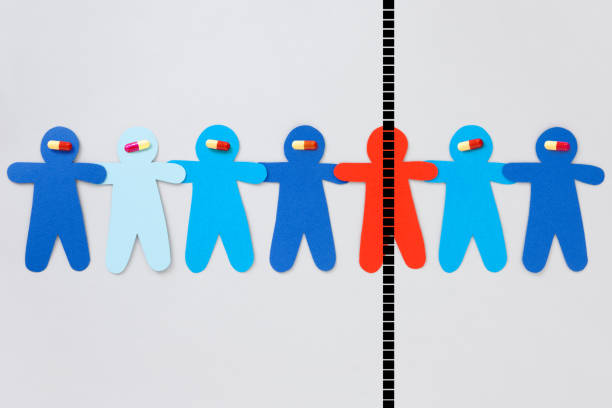
The modern creative workplace treats format diversity like an unalloyed good. You are encouraged to write long-form essays, shoot short vertical videos, design infographics, launch a podcast, prototype an app, and publish a newsletter—often all in the same month. The logic is seductive: the more ways you can express an idea, the more people you can reach, the more skills you can stack, and the less likely you are to fall into a rut. On the surface, format diversity feels like creative freedom. In practice, it frequently becomes a trap that scatters attention, waters down expertise, and leaves you with a trail of half-finished experiments instead of a body of work you can be proud of. Understanding exactly where format diversity goes wrong—and how to sidestep those pitfalls—is essential if you want to use variety as fuel rather than letting it drain your creative tank.
The first pitfall is the illusion of productive momentum. When you jump from writing a script to adjusting lighting for a video to sketching a storyboard to curating a mood board on Pinterest, the sheer novelty of switching gears can feel like progress. Each new format triggers a small spike of excitement because you are learning something fresh. But that feeling often masks a simple truth: you are repeatedly climbing the shallowest part of the learning curve. Real creative breakthroughs happen when you push past the early, easy gains and wrestle with the stubborn problems that only emerge after you have mastered the basics. If you constantly hop between formats, you never stay in one place long enough to face those problems, so your work plateaus at a beginner-intermediate level across five mediums instead of reaching depth in one. The output looks busy, but it rarely leaves a mark.
A second pitfall is creative brand confusion. This matters whether you are a freelancer, a studio founder, or an in-house creative leader. When your portfolio swings from oil paintings to no-code websites to stand-up comedy clips, the people you want to impress—clients, collaborators, audiences—struggle to understand what you actually do well. They may admire your curiosity, but curiosity rarely gets you hired or remembered. Consistent excellence in a recognizable format builds trust because it tells a simple story: when someone needs a specific thing done brilliantly, they think of you. Format diversity, when left unchecked, blurs that signal until nobody is sure what to hire you for, and you end up being known as the person who dabbles in everything but owns nothing.
A third, less obvious pitfall is the way format diversity inflates what I call the maintenance overhead of your creativity. Every format you adopt demands its own set of tools, distribution channels, and mental models. A podcast requires recording gear, editing software, hosting platforms, and a promotion rhythm. A newsletter needs an email system, a content calendar, and a steady idea pipeline. When you add a new format, you do not just add a new creative outlet—you add a recurring set of chores that eat into the time you could spend on your primary work. Before long, you find yourself buried in plugin updates, analytics dashboards, and format-specific admin, wondering why you have not made anything that feels meaningful in weeks.
So how do you keep the spark of variety without falling into these traps? The most effective move is to pick a home format and give it clear, unapologetic priority. A home format is the medium where you do your deepest thinking and your most distinctive work. It might be long-form writing, oil painting, furniture design, or coding generative art. Whatever it is, you treat it as the center of gravity. Everything else orbits it. That means you do not start a new format casually; you interrogate it with a single question: “Will this help me get better at my home format, or will it pull me away?” Sometimes the answer is yes—sketching quick thumbnails in a notebook can sharpen your eye for composition even if your main work is photography. Learning basic animation might make you a stronger graphic designer. But if the new format does not feed the core, you treat it as a weekend hobby, not as a professional pursuit that demands a launch, a brand, and a schedule.
Another practical safeguard is to impose a time-and-energy budget on exploration. Instead of telling yourself you will “try out” video content indefinitely, give it a fixed window—say, six weeks with a hard end date and a clear success metric. At the end of that period, you look honestly at the results and decide whether to fold the format into your practice, keep it as a low-stakes sketch pad, or drop it entirely. This prevents the slow drift where a one-off experiment turns into a permanent obligation you never meant to sign up for. It also stops you from piling on new formats while leaving old ones on life support, which drains attention without delivering any joy or results.
The creative class often worries that focusing on fewer formats will lead to boredom or make their work feel stale. The opposite tends to be true. Constraints force invention. When you decide that you will only work in black-and-white photography for a year, you stop solving problems by switching tools and start solving them by thinking harder about light, texture, and timing. You mine depth instead of searching for novelty on the surface. Many of the most celebrated creative voices are conspicuous for what they stubbornly refuse to do. A filmmaker might never touch social media. A cartoonist might work in the same small square panel format for decades. That refusal is not narrow-mindedness; it is an understanding that the richest ideas often emerge when you stop looking sideways at what everyone else is doing and drill straight down into the medium you already have in your hands.
Finally, know the difference between format diversity as an input and format diversity as an output. Consuming a wide range of formats—reading novels, watching films, playing games, walking through architecture—feeds your imagination and makes your work smarter. That kind of diversity is almost always beneficial. The trouble starts when you feel compelled to produce in every format you enjoy consuming. Just because you love listening to podcasts does not mean you need to host one. Separating input from output frees you to be a curious, omnivorous learner without turning every interest into another project that demands an audience.
Format diversity is not the enemy. It becomes destructive only when it runs on autopilot, guided by the fear of missing out rather than by a clear creative purpose. The goal is not to work in a single format forever, but to build a solid creative core strong enough that any new format you introduce actually adds to your work instead of diluting it. When you know which medium is your true north, you can wander widely without losing your way.