The Essential Link Between Critical Thinking and Effective Decision-Making
At its core, critical thinking is not merely an academic exercise but the disciplined art of ensuring that you use the best thinking you are capable of in any set of circumstances. It is intrinsically related to every facet of rational inquiry and problem-solving, serving as the engine that drives us from superficial understanding to reasoned judgment. The relationship between critical thinking and the myriad processes of learning, creating, and deciding is both foundational and transformative, acting as the sieve through which information must pass to become reliable knowledge.
Critical thinking is fundamentally related to the evaluation of information and arguments. In an age of unprecedented information flow, the ability to discern credible sources from dubious ones, to identify logical fallacies, and to separate fact from opinion is paramount. This evaluative function is the direct application of critical thinking. It moves us beyond passive consumption to active interrogation, asking not just “what is being said?“ but “how is it being argued?“ and “what evidence supports it?“ This skeptical yet open-minded stance prevents the uncritical adoption of ideas and fosters intellectual autonomy. Without this relationship, individuals are left vulnerable to manipulation and misinformation, accepting claims based on emotion or authority rather than reasoned analysis.
Furthermore, critical thinking is deeply related to problem-solving and innovation. Effective problem-solving requires a clear definition of the issue, the generation of potential solutions, and the systematic evaluation of those options. Each step demands critical thinking skills. Defining a problem accurately involves avoiding assumptions and framing the issue without bias. Generating solutions requires creative thinking that is nonetheless bounded by logical constraints. Most crucially, evaluating potential solutions involves projecting consequences, weighing evidence, and considering ethical implications—all hallmarks of a critical mind. Thus, the relationship here is one of structure and guidance; critical thinking provides the framework that channels creativity into viable, effective outcomes rather than haphazard guesses.
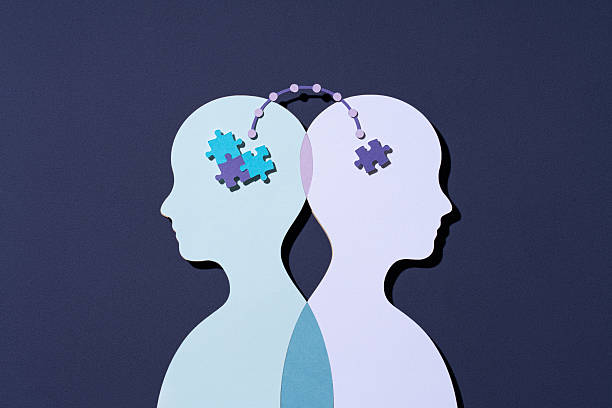
The relationship extends profoundly to self-reflection and metacognition, which is the awareness of one’s own thinking processes. A true critical thinker does not only analyze the world but also turns that analytical lens inward, examining their own beliefs, biases, and cognitive shortcuts. This aspect of the relationship is perhaps the most challenging and the most vital. It involves recognizing one’s own confirmation bias, the tendency to seek information that supports pre-existing beliefs, and cultivating the intellectual humility to change one’s mind in the face of new, compelling evidence. This self-regulatory function ensures that critical thinking is not wielded as a weapon solely against others’ ideas but as a tool for personal intellectual growth. It transforms thinking from an unconscious process to a deliberate practice.
Finally, critical thinking is inextricably related to effective communication and collaboration. To persuade or explain convincingly, one must construct coherent, well-supported arguments—a process that relies entirely on prior critical analysis. Similarly, to collaborate productively, one must be able to critically yet fairly evaluate colleagues’ contributions, ask clarifying questions, and synthesize diverse viewpoints into a unified understanding. The relationship here is symbiotic: clear communication often clarifies thought, and rigorous thought leads to clearer communication. It moves discourse from the mere exchange of opinions to the constructive building of shared knowledge.
In essence, critical thinking is not a standalone skill but the connective tissue that links observation to understanding, and inquiry to conclusion. Its relationship to these processes is that of a master key, unlocking the doors to deeper comprehension, more ethical judgment, and more effective action. It is the disciplined application of curiosity and reason that elevates simple thought into purposeful, reliable cognition. To ask how it is related to these endeavors is to ask how a foundation is related to a house; it is the necessary, supportive base upon which everything else securely rests, determining the strength and integrity of all that is built upon it.
Articles