
The Discerning Eye: How Artistic Observation Transforms Ordinary Sight
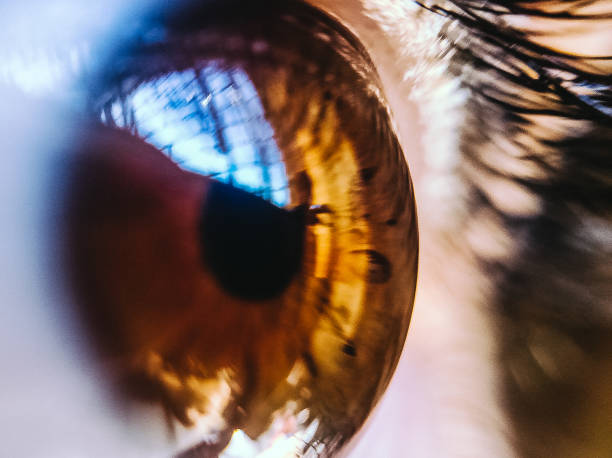
At first glance, the act of seeing appears universal—light enters the eye, the brain processes shapes and colors, and we navigate the world. Yet, the way an artist observes that same world is fundamentally different from everyday seeing. It is a shift from passive reception to active interrogation, from glancing to gazing, and from recognizing to truly comprehending. While everyday seeing is utilitarian, aimed at efficiency and survival, artistic observation is an immersive, analytical, and empathetic practice that seeks to uncover the essence, structure, and emotional resonance hidden within the visual field.
Everyday seeing is largely automatic and selective, a tool for functionality. We scan our environment to avoid obstacles, read signs, recognize faces, and complete tasks. This mode of vision is governed by cognitive shortcuts; our brains filter out immense amounts of visual data deemed irrelevant to our immediate needs. We see the street as a path to our destination, a tree as a generic piece of scenery, and a face primarily for identity. This efficiency is essential for daily life, but it comes at the cost of depth. We see the labels of things, not their substance. In contrast, an artist consciously disables these filters. The artist’s observation begins with a deliberate slowing down, a commitment to linger where the everyday eye would move on. That same street becomes a study in perspective, texture, and the play of shadow. That tree transforms into a complex network of lines, a unique pattern of bark, and a specific, non-generic green.
Furthermore, artistic observation is deconstructive. Where the layperson sees a finished object—a chair, a bowl of fruit, a figure—the artist sees an assembly of abstract components. They perceive the underlying geometry, the skeletal structure, the negative spaces around the form as actively as the form itself. They break down the scene into relationships: of light to shadow, of warm color to cool, of a curved line against a straight one. This analytical vision is not about the name of the thing but about its visual properties. An artist observing a face sees not just “Sarah,“ but the way the light catches the plane of her cheekbone, the precise shape of the shadow beneath her nose, and the subtle, cool hues reflected in her skin from a nearby window. This is seeing as a form of thinking, where the eye is constantly asking how—how does that form turn away from the light? How does that color relate to its complement across the room?
Ultimately, the most profound distinction lies in the pursuit of meaning and connection. Everyday seeing is often disconnected from feeling; we witness events and objects with a degree of emotional neutrality required to get through the day. Artistic observation, however, is inherently empathetic and poetic. It seeks the story, the mood, the hidden narrative. An artist observing a weathered door sees not just a barrier, but a record of time—the peeling paint tells of seasons, the scratched knob speaks of countless hands, the angle of light suggests mystery or welcome. They observe with a sense of wonder and a desire to translate not merely the visual facts, but the emotional experience of those facts. This requires a deep engagement with the subject, a willingness to be affected by it, and an intention to communicate that affect to others.
In essence, the artist’s observation is everyday seeing amplified, focused, and infused with intention. It is a disciplined practice that moves from the superficial to the significant, from the automatic to the awe-inspired. While we all possess the biological machinery for sight, the artist cultivates a different kind of vision—one that looks at the world not just to use it, but to understand it, feel it, and ultimately, to reimagine it. It is a reminder that the world is far richer than our efficient, everyday glances suggest, and that beauty, truth, and insight await in the spaces between our ordinary perceptions.