The Desk Rotation Method: How Changing Your Focal Point Boosts Ideas
Most people set up their desk once and never touch it again. They arrange the monitor, keyboard, and chair in a way that feels comfortable on day one, and then they treat that setup as permanent. But here is a simple truth that few creative workers exploit: your brain pays attention to what is in front of you, and if that view never changes, your thinking patterns settle into a rut. Changing the angle of your desk, even by a small amount, forces your eyes, neck, and mind to engage with a fresh perspective. It is one of the cheapest, fastest ways to shake loose a stuck idea.
Think about how you currently face your workspace. Chances are your desk points toward a wall, a window, or a doorway. That direction has become automatic. When you sit down, your brain already knows what it will see. The same stack of papers, the same power strip, the same plant or coffee mug. This predictability is great for routine tasks, but it works against creativity. Creativity thrives on novelty. When your environment offers no surprises, your thoughts follow the same tired loops. By rotating your desk ninety degrees or moving it to a different corner, you introduce a micro-dose of uncertainty. Your visual cortex has to process new information, and that mental effort spills over into the way you approach problems.
You do not need to rearrange the entire room. Start with a simple shift. If your desk is against a wall, pull it out so that it faces the room. Suddenly you are looking at bookshelves, other furniture, or even the door. That new line of sight changes how you scan the space. You might notice a book you have not opened in months, or a poster that reminds you of an old project. These small visual cues can trigger associations you would have missed while staring at a blank wall. The act of repositioning the desk itself is also valuable. Moving furniture uses your body in a way that sitting at a keyboard does not. Physical movement wakes up the brain. It breaks the trance of being glued to a chair. Even a five-minute rearrangement can leave you feeling more alert and more open to new connections.
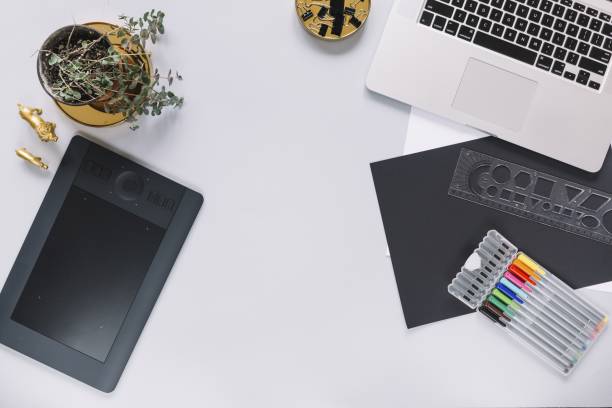
Another effective technique is to rotate your chair rather than the desk. If your desk is heavy or fixed in place, simply turn your chair fifteen or thirty degrees to the left or right. That slight angular change forces you to look at your monitor from a different perspective. It sounds trivial, but your brain interprets the altered angle as a new context. When you write or brainstorm from a rotated position, the words often flow differently. Some graphic designers swear by turning their drawing tablet by forty-five degrees when they hit a block. They report that lines and curves suddenly become easier to execute. The principle is the same for any creative work: changing the geometry of your immediate surroundings changes the geometry of your thinking.
The reason this works is tied to how we anchor our attention. The human brain is a pattern-matching machine. It quickly learns where everything is in your workspace and then stops consciously registering those objects. That is efficiency, but it is also a creativity killer. When you stop noticing your environment, you stop drawing inspiration from it. Shifting your desk angle forces you to re-anchor. You have to figure out where the lamp is now, or how to reach your notebook without looking. This mild disorientation keeps your brain in an active, searching mode rather than a passive, autopilot mode. That active mode is exactly where new ideas emerge.
A practical way to approach this is to schedule a desk rotation every few months or whenever you feel your work growing stale. Mark it on your calendar as a creative refresh. Do not overthink the new placement. Just move the desk to a spot that feels slightly uncomfortable at first. That discomfort is a signal that your brain is working to adapt, which is what you want. After a day or two, the new layout will become familiar, and you can rotate again. The point is not to find one perfect arrangement, but to keep the arrangement evolving. Each new configuration offers a different focal point, a different set of peripheral objects, and a different relationship to the light source. Over time, these variations build a kind of mental flexibility that makes it easier to break out of creative ruts.
Of course, you have to make sure the new layout still supports your basic tasks. You need to reach your keyboard, see your screen, and have room for writing or drawing. But within those constraints, experiment. Try facing away from a window instead of toward it. Try putting your desk in the middle of the room if you have the space. Try turning it so that the long side faces the door, giving you a broader view of the room. Each experiment will teach you something about how your environment interacts with your thought process. Some people find they do their best thinking when they have a wall behind them, so nothing sneaks up. Others need a wide, open view. The only way to know is to try.
The next time you feel your ideas drying up, resist the urge to scroll through social media for inspiration. Instead, stand up, grab the edge of your desk, and rotate it a quarter turn. Then sit down and start working. Within minutes, you will likely notice a difference. Your brain will be busier, more curious, and more willing to make unexpected connections. That is the power of a simple change in focal point. It costs nothing, takes almost no time, and delivers immediate creative returns.
Articles