The Desert’s Silent Lesson for Creative Thinking
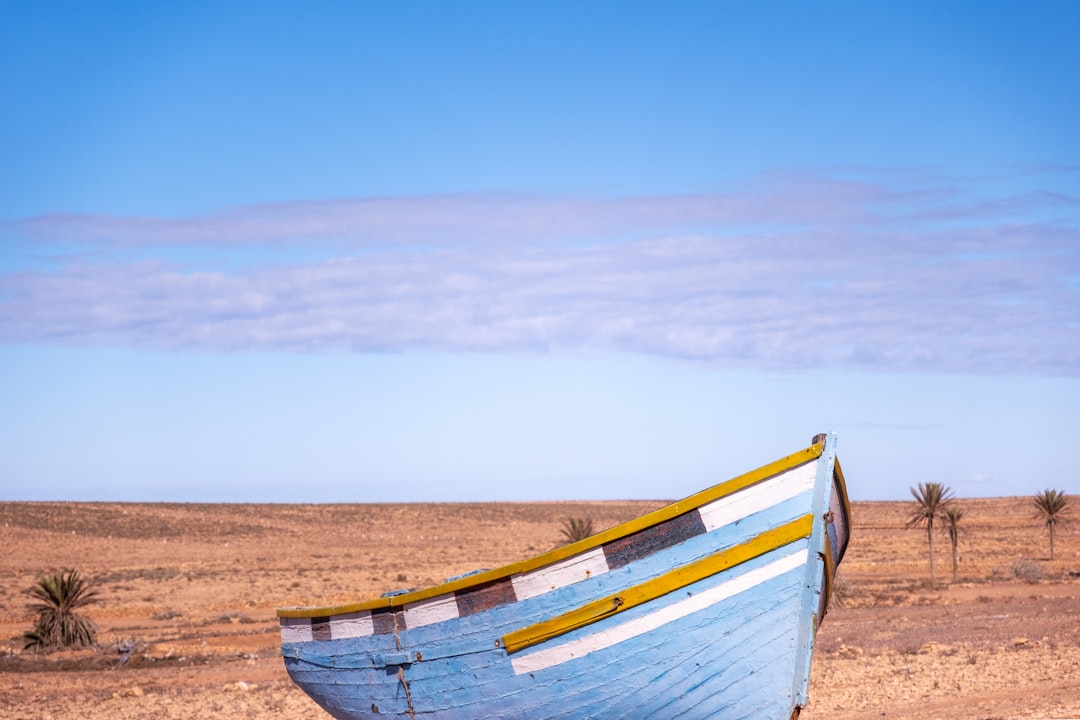
Most conversations about creative inspiration revolve around lush forests, crashing waves, or mountain peaks. The desert rarely gets invited to the party. Yet some of the most stubborn creative blocks I’ve encountered have shattered not in a coffee shop with a notebook, but in the middle of a dry, empty basin where the only sound was the wind scraping across sandstone. If you want to shake your brain loose from its usual ruts, consider spending a few hours in a place that offers nothing but space, stillness, and heat.
The desert works differently than other natural settings. A forest bombards you with detail: layered canopies, dappled light, the hum of insects, the smell of damp earth. That richness can spark ideas, sure, but it can also overwhelm your attention. Your brain stays busy processing input instead of generating new connections. The desert, by contrast, strips everything away. There is no clutter. The horizon is a clean line. The ground is monochrome. The air is dry and quiet. This sensory reduction forces your mind to turn inward. Without constant external stimuli, your default mode network—the part of your brain that wanders, daydreams, and makes unexpected links—finally gets a chance to run free.
Walk for twenty minutes on a flat, open plain under a wide sky and you will notice your thoughts begin to slow down and then stretch out. The usual mental chatter about deadlines, emails, and to-do lists loses its grip. In its place, half-formed ideas start to drift up from somewhere deeper. That is not mystical mumbo-jumbo. It is your brain responding to a change in scale. When you are surrounded by immense, ancient, and indifferent geology, your own problems shrink. The anxiety that was squeezing your imagination loosens. You start to see your creative project from a distance, as if you are standing on a ridge looking down at it. And from that distance, solutions become visible that were hidden when you were right on top of them.
There is also a practical reason the desert works: it forces you to pay attention to your body. Heat, thirst, direct sun—these are immediate physical signals you cannot ignore. That grounding in the present moment snaps you out of abstract rumination. You become aware of your own breathing, your own footsteps, the weight of the water bottle in your pack. That is a form of mindfulness without any of the spiritual packaging. When your body is fully engaged in navigating a basic environment, your mind is free to play in the background. Many writers and designers I know keep a desert trip in their back pocket precisely for this reason. They do not go to take photographs or collect rocks. They go to let the emptiness reset their mental slate.
If you have never tried this, start small. Drive to the nearest patch of open, arid land—a state park, a BLM area, even a large vacant lot if that is all you have. Leave your phone in the car. Bring water, a hat, and nothing else. Walk until you are far enough from the road that you cannot hear traffic. Then stand still for five minutes. Do nothing. Do not try to think about your project. Do not force ideas. Just let the silence press against your ears. You will feel an almost physical sensation of your mind expanding to fill the space around you. That is the creative moment beginning.
The desert does not offer easy metaphors. It is harsh, unforgiving, and beautiful only if you adjust your eyes. But that is exactly what makes it such a powerful catalyst. Creativity is not always about adding more—more images, more influences, more stimulation. Sometimes it is about subtraction. The desert subtracts everything except the essentials: you, your breath, and the vast, indifferent sky. What you find in that empty space is a clarity that no app, no playlist, no online course can provide. It is the oldest creative hack there is, and it is free.
So next time you hit a wall, do not stare at another blank page. Go find a place where there is nothing to look at. Let the nothing do its work.
Articles