The Creative Spark of Joining a Recreational Dodgeball Team
Most adults spend their workdays in carefully controlled environments where predictability is prized and risk is minimized. The conference room, the design studio, the coding terminal—each space rewards the known path. But creativity does not grow in perfectly manicured soil. It thrives on chaos, on the split-second decision made with incomplete information, on the sudden need to abandon a plan and improvise. This is precisely why joining a recreational dodgeball team can be one of the most effective ways to reboot your creative engine.
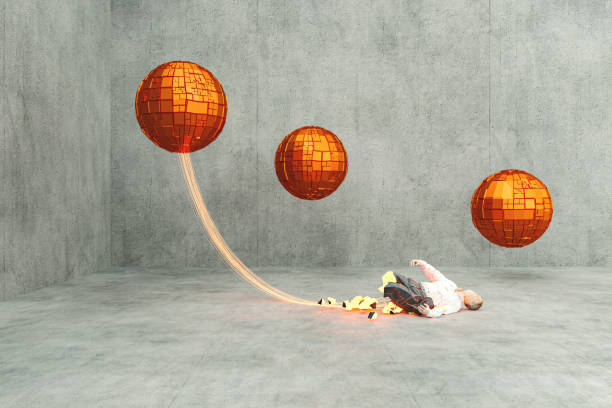
Dodgeball, at its core, is a game of rapid-fire problem solving. When a rubber ball comes flying at your head at thirty miles per hour, you have less than a second to decide whether to duck, catch, dive, or deflect. There is no time for deliberation, no whiteboard for pros and cons. Your body and mind must act as one, drawing on instinct and pattern recognition. This kind of forced, on-the-spot decision making is the exact opposite of the careful analysis that often stalls creative work. It trains your brain to trust its first impulses, to stop overthinking and start moving. Over time, that reflex carries over into your desk work. You become more willing to try a half-baked idea, to sketch a rough concept, to send an email before it is perfectly polished. The fear of imperfection weakens when your body remembers that a clumsy dodge that almost works is far better than standing still and getting hit.
Equally important is the strategic layer beneath the chaos. A good dodgeball team does not just throw wildly. They build formations, designate targets, coordinate feints, and use the court geometry to trap opponents. You learn to read the body language of a thrower, to anticipate the arc of a ricochet, to understand when retreating is actually the smartest form of attack. This kind of spatial and social thinking engages parts of your brain that standard office work often leaves dormant. You start to see problems differently—not as linear puzzles to be solved in sequence, but as dynamic systems where one small shift can change the entire field. A designer might apply that lesson to a user interface, realizing that moving a single button can alter the whole flow. A writer might find a new way to structure a story by thinking of each character as a player on a court, each action a throw or a dodge.
The social element of a recreational team is another powerful creative catalyst. Unlike a pickup game among friends, a recreational league usually brings together people from completely different professions and life stages. You might share a sideline with a tax accountant, a high school teacher, a retired mechanic, and a graduate student in astrophysics. In the heat of a game, none of those labels matter. What matters is who makes the best catch, who can fake a throw, who knows where to stand when the other team is down to one player. This forced collaboration across backgrounds breaks down the mental silos that often confine creative thinking. You hear jokes, insults, and strategies that would never emerge in your usual social circles. You absorb new rhythms of communication, new ways of celebrating victory and handling defeat. Over weeks and months, these interactions subtly reshape your own mental vocabulary, giving you fresh metaphors and analogies to deploy in your creative work.
There is also a physical component that cannot be ignored. Creativity is not solely a mental process. It lives in the body. When you are laughing, sweating, breathing hard after a long rally, your nervous system resets. Cortisol drops, endorphins rise, and the mental chatter that often blocks inspiration fades away. Many creative professionals describe their best ideas arriving during or immediately after physical activity, and dodgeball is particularly good at inducing that state because it demands total presence. You cannot worry about a deadline while you are staring down a player winding up for a throw. The present moment is all that exists. This full immersion acts like a pressure wash for the mind, clearing out the static and leaving space for new thoughts to surface.
Finally, joining a recreational team forces a healthy rupture in routine. Most of us fall into predictable patterns of work, commute, meals, and sleep. Those patterns are efficient, but they are also creativity killers. The brain gets lazy, relying on habit instead of exploration. A weekly dodgeball game inserts a small, structured dose of novelty into your schedule. You have to arrive at a new place, learn new rules, interact with new people, and engage a new set of muscles. That novelty does not have to be dramatic to be effective. Small disruptions, consistently repeated, are often more powerful than a single big adventure because they keep the brain’s plasticity alive. Over a season of games, your mind learns to expect the unexpected, to treat every week as a fresh experiment.
None of this requires you to be athletic or competitive. Recreational leagues are built for ordinary adults who want to have fun and maybe get a little scraped up. The point is not winning a trophy. The point is to put yourself in a situation where your normal problem-solving toolbox does not quite apply, where you have to invent new ways to move and think and cooperate. That is the exact condition under which creativity flourishes. So lace up some sneakers, find a local league, and get ready to duck. The next big idea might just come flying at you from an unexpected angle.
Articles