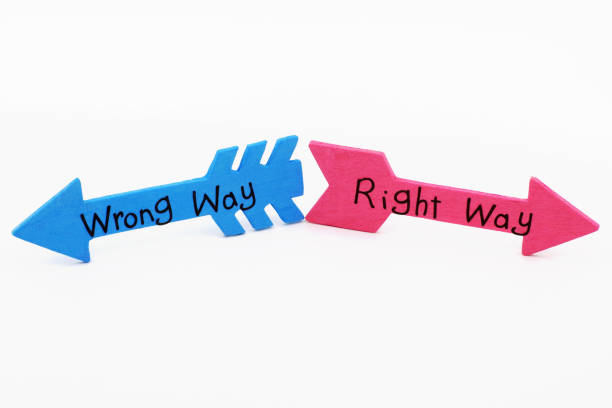
The Creative Power of Ignorance
Every creator hits the wall where they think they need to know more before they can make anything new. You read another book, take another course, watch another tutorial, and still the work feels stuck. The assumption underneath all this effort is that knowledge fuels creativity. But here is a thought that might unsettle you: the most productive state for creative work is often not knowing. Done right, deliberate ignorance can be a sharper tool than expertise.
Think about how children approach a pile of LEGOs. They do not know the official instructions. They do not know which pieces are meant for which model. They just start snapping things together, and sometimes they build something nobody has ever seen. A trained adult might look at the same pile and see only the set from the box. That adult knows exactly what the pieces should become. The child does not, and that ignorance is precisely what frees them.
Consider the history of invention. The snowmobile was born because a man in a garage bolted a car engine onto a sled. He was not an automotive engineer. He did not know all the reasons why it would not work. He just knew that riding on snow was slow and he wanted it faster. The Post-it note came from a scientist who was trying to make a super-strong adhesive and instead made one that barely stuck. He had enough knowledge to run the experiment, but he did not know that his failure was worthless. His ignorance about the commercial value of a weak glue allowed him to let the strange material sit around for years until someone else saw a use.
The problem is not knowledge itself. The problem is the belief that knowledge is the only path to insight. When you have spent a decade in a craft, you have internalized its rules. Those rules are useful, but they also become invisible fences. You stop questioning the shape of the fence because you have walked along it so many times. Ignorance rips the fence down. It lets you walk in a completely new direction, not because you are smarter, but because you literally do not see the fence.
How can you use this on purpose? Pick a domain you know almost nothing about and try to make something in it. If you are a writer, go build a birdhouse. Do not research birdhouse design. Do not watch a video. Just buy some wood and nails and try. The resulting structure will be useless. But the process of fumbling through a new material, a new shape, a new set of tools will wake up parts of your brain that your usual craft has put to sleep. Those fresh neural sparks will carry back into your writing. The awkwardness forces real thought. You cannot rely on habit, because you have no habit. You have to rely on instinct, guesswork, and play.
Another method is to pretend you are a foreigner in your own field. Ask the most basic questions you have not asked since you started. Why does a story need three acts? Why does a chair have four legs? Why does a logo have to be simple? Then, for one honest hour, act as if the answer is no. Write a story with one act. Design a chair with three legs. Build a logo that is a paragraph of text. These exercises will feel absurd. That absurdity is the point. You are deliberately using ignorance to break the assumption that the established answer is the only answer.
There is a difference between being ignorant and acting ignorant. Stupidity is not the goal. The goal is a temporary suspension of the known. You are not throwing away your skills. You are setting them on a shelf while you try on a persona that knows nothing. This persona sees a problem as if for the first time. It does not say, “That will never work.“ It says, “Why not try it?“ Many breakthroughs in art, science, and business came from exactly that naive question.
A sculptor once said that the hardest thing in the studio is to unlearn what you have just learned in the last piece. That is the daily battle. Every completed project fills your head with a new set of assumptions about how things should be done. The next project then suffers from that confidence. To fight it, you must give yourself permission to be an amateur again. You can do this for thirty minutes. You can even do it for the entire first draft of a project. Save the expert judgment for the edit, not the generation.
So the next time you sit down to create, try not knowing more. Try knowing less. Walk into the work as if it is the first time you have ever seen a canvas, a story, a chord, a recipe. Let your ignorance ask the questions that expertise was sure it had answered. The results will be rough, strange, and often exactly what you needed.
Articles