The Creative Benefit of Being the Worst Person in the Room
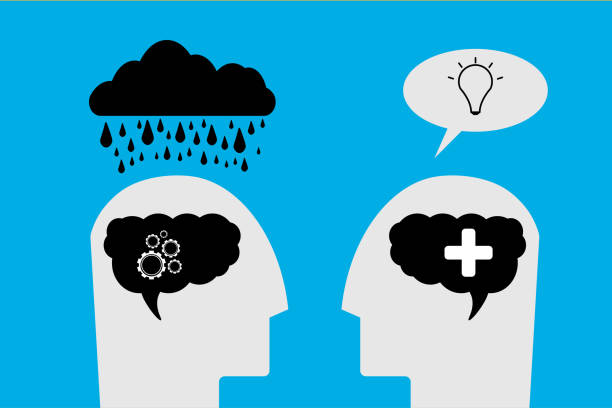
Imposter syndrome thrives on the gap between your internal self-assessment and the external expectations you perceive others have of you. The standard advice—remind yourself of your accomplishments, talk to a mentor, write down your wins—often fails because it asks you to argue against a feeling with logic. A more direct approach is to deliberately place yourself in situations where you are objectively the least competent person present. This is not humility for its own sake. It is a tactical move to short-circuit the very mechanism that generates imposter anxiety.
When you walk into a room where everyone else has ten years of experience in a craft you have never touched, there is no room to feel like a fraud. You are not faking anything. You are a beginner, and that status is honest. The internal monologue shifts from “They are going to find out I do not belong here” to “They already know I do not belong here, so I can stop worrying about it.” The pressure to perform evaporates because performance is not expected. What is expected is struggle, clumsiness, and questions. That frees your mind to focus on learning rather than defending.
For a creative person, this is a goldmine. Most creative blocks do not come from a lack of ideas but from a fear that the ideas we produce will not meet some internal standard. We edit before we write. We discard sketches before they are finished. We reject melodies before they are played through. The constant threat of being exposed as untalented keeps us in a cramped safety zone. If you remove the possibility of being seen as talented—by entering a field where you manifestly are not—the editing process shuts down. You have to produce badly because there is no other option. And in that bad production, you often stumble onto something that would never have emerged from your polished, self-conscious workflow.
Consider a graphic designer who has not touched clay since elementary school signing up for a hand-building pottery workshop. The first lump of clay will be lopsided, the walls too thick, the shape barely recognizable as a cup. The instructor will correct her grip. The person at the next wheel will throw a perfect cylinder in thirty seconds. The designer has two choices: leave feeling incompetent, or stay and realize that incompetence is the entire point. If she stays, she notices something: she is watching the clay with a level of attention she rarely gives to her own screen. She is not thinking about client feedback or portfolio gaps. She is thinking about pressure and moisture and where to put her thumb. That hyperfocus is the same mental state that produces breakthrough ideas in her own field, but she cannot access it when she is performing because she is too busy monitoring her performance.
The same principle applies to a writer walking into an open mic night for stand-up comedy with three joke attempts scribbled on a napkin. The audience knows he is not a comedian. The other comics know he is not a comedian. He knows he is not a comedian. The joke tanks. He gets a polite silence. But in that silence, he experiences a small freedom: the worst has happened and he is still alive. The imposter syndrome was built on a fantasy of catastrophic exposure. Now he has been exposed, and the ceiling did not fall. Next time he sits down to write a short story, the memory of the empty laughter softens the fear of writing a bad sentence. He has already survived public failure on a stage. A bad draft in a private document is nothing.
Beyond the psychological reset, there is a practical creative gain. When you are the worst in the room, you have the best vantage point for learning. Experts often have blind spots because their skills have become automatic. They cannot explain the tiny adjustments they make without thinking. A novice, by contrast, is acutely aware of every mistake. You see exactly what separates a good outcome from a bad one because you feel the difference in your hands. That granular awareness translates back to your primary creative domain. A photographer who starts blacksmithing learns to read material stress in a way that changes how she reads light. A musician who takes up carpentry develops a tactile sense of resonance that alters his mix decisions. The cross-domain knowledge is not metaphorical; it is physical. And it arrives because you were willing to be bad at something long enough to absorb its logic.
The uncomfortable truth is that most people avoid this state. We cling to domains where we are competent because competence feels safe. But safety is the enemy of creative growth. New experiences that allow you to be bad are not a distraction from your real work. They are laboratory conditions for dismantling the fear that blocks your real work. The next time imposter syndrome flares up, do not fight it by listing your credentials. Find a room where you have none. Walk in. Be the worst. Let that vulnerability reset your relationship with being a beginner, and watch what it does to your ability to take risks when you return to what you actually know.
Articles