
The Creative Alchemy of Bread Baking
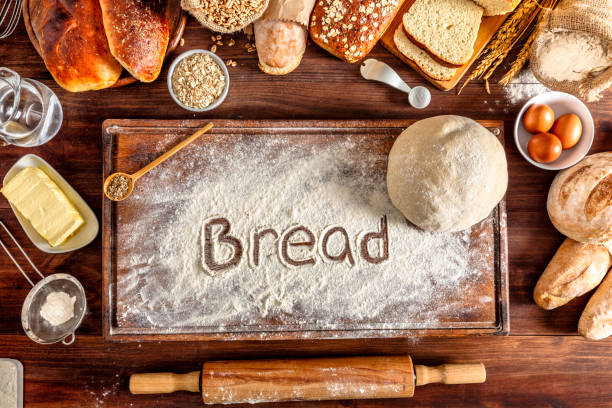
Most people think of creativity as something that happens in the head—a flash of insight, a sudden rearrangement of images, a new way of seeing a problem. But the most reliable path to creative breakthroughs often runs through the hands. Learning a physical craft that demands patience, repetition, and a willingness to fail forces your brain to operate differently than it does when you are staring at a blank screen or a white canvas. Bread baking is one of those crafts. It seems simple: flour, water, salt, and time. Yet the process of mixing, kneading, waiting, shaping, and baking is a full-body lesson in how creativity actually works.
The first thing bread baking teaches you is that good results require deep attention to variables you cannot fully control. Humidity, room temperature, the age of your flour, the activity level of your starter—each factor shifts the behavior of the dough. You cannot follow a recipe like a robot and expect the same loaf every time. You have to watch, feel, and adjust. Your fingertips learn to sense when the dough has absorbed enough water. Your nose picks up the sour, fruity notes of a healthy fermentation. Your ears hear the crackle of the crust as it cools. This kind of sensory tuning is something most creative people lose when they spend too much time behind a screen. Reconnecting with your senses wakes up parts of your mind that have been dormant. You start noticing subtleties in your other work too—the texture of a line, the weight of a sentence, the rhythm of a color palette.
Then there is the waiting. Bread dough is not interested in your deadlines. It rises on its own schedule, sometimes in two hours, sometimes overnight. If you rush it, you get a dense, flat loaf. If you let it go too long, it collapses. The only way to succeed is to accept that you cannot force the process. This is a hard lesson for anyone who makes a living from creative output. We want to push through blocks, hammer out solutions, and produce on demand. Bread says no. It forces you to step away, to let the flour and water do their quiet work while you do something else. That idle time is not wasted. It is when your subconscious mind, freed from the pressure of direct problem-solving, begins to connect ideas you never would have linked on purpose.
Another thing bread baking does is normalize failure. Your first few loaves will look like rocks. They will be gummy inside, burnt on the bottom, or oddly shaped. That is not a sign of incompetence. It is data. Every misshapen loaf tells you something specific about your technique, your ingredients, or your environment. The creative class spends a lot of energy trying to avoid mistakes. Bread bakers learn that mistakes are the only way to learn. You burn the bottom? Lower the oven rack or add steam. The crumb is too tight? Increase hydration or lengthen the proof. Each problem is a puzzle with a solution that you discover by trying, failing, and trying again. This iterative mindset is exactly what fuels innovation in any field.
Perhaps the most surprising creative benefit of bread baking is how it forces you to think in systems. A loaf of bread is not a single object. It is the result of a chain of events: the yeast feeding on sugars, the gluten strands forming a network, the steam trapped by the crust, the chemical reactions of the Maillard effect. If you change one variable, the entire system shifts. Bakers quickly learn to think holistically, to ask not just “how do I get a taller loaf?” but “how does changing the hydration affect the fermentation rate, which then changes the oven spring, which then changes the crust color?” This kind of systems thinking is invaluable for any creative project, whether you are designing a product, writing a novel, or composing a piece of music. You stop treating your work as a collection of isolated parts and start seeing it as a living, interdependent organism.
Finally, bread baking gives you a product you can share. That is important. Creativity can feel lonely and abstract. But when you pull a hot, fragrant loaf out of the oven and place it on a table, people gather. They tear off pieces, they dip it in oil, they talk. The bread becomes a catalyst for connection. That social feedback loop—making something, offering it, watching it be enjoyed—fuels the desire to keep experimenting. You want to try a different flour, a longer ferment, a new shaping technique, because you know there will be an audience waiting to taste the result. That kind of extrinsic motivation, combined with the intrinsic satisfaction of mastery, keeps the creative engine running.
So if you feel stuck in your usual creative practice, step into the kitchen. Ignore the recipe books at first. Get a bag of whole wheat flour, a jar of water, and a tiny bit of yeast. Mix them together. Wait. Feel. Fail. Taste. You might end up with something edible, or you might not. Either way, you will have trained your brain to work in a mode that no amount of brainstorming or visualization can replicate. Bread baking is not a metaphor for creativity. It is creativity, made visible and warm.
Articles