The Blueprint Ephemera: How Industrial Catalogs and Technical Schematics Unlock Visual Thinking
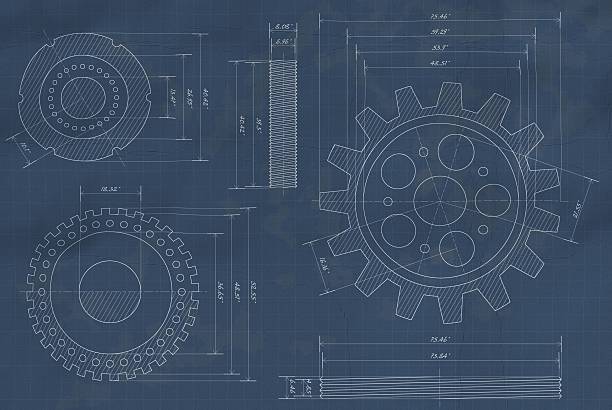
The most effective resource libraries for creative work are rarely built from books that try to teach you how to be creative. They are built from objects that are already living a different life somewhere else. One of the most overlooked and potent additions to any such library is a collection of what could be called blueprint ephemera: old industrial catalogs, architectural specifications, patent drawings, nautical charts, and machinery schematics. These are documents that were never intended to inspire anyone. They were made to instruct, to build, or to sell steel beams and hydraulic pumps. That is precisely what makes them so valuable.
When you seek out a new experience as a way to shake up your thinking, the goal is not merely to see something different. The goal is to encounter a different logic system. A poem operates on one kind of logic. A marketing brief operates on another. A blueprint for a 1950s drill press operates on a logic that has nothing to do with emotion, narrative, or persuasion. It is a language of precision, tolerance, and pure function. Inviting that language into your creative space forces your brain to switch cognitive gears. You cannot look at a cross-section of a turbine and think in metaphors. You have to think in axes, dimensions, and material properties. That shift, even if you only make it for thirty seconds, breaks the pattern of your own habitual thinking.
The visual texture of these documents is also a major part of their power. Modern screens have conditioned us to expect clean, vectorized, perfectly kerned graphics. Blueprint ephemera offers the opposite. They have faded ink, smudged fingerprints, coffee stains that were left by an engineer in 1963, and hand-annotated margin notes in a script you cannot quite read. These are not imperfections. They are evidence of a human being engaged in a real problem. The smudge is a trace of a decision. The coffee stain is a record of a late night. When you populate a shelf or a wall with these objects, you are not just decorating. You are surrounding yourself with the material evidence of other people solving hard problems, and that is a far more effective prompt than any motivational quote.
Building this part of your resource library requires a specific kind of hunting. You will not find these items in a stationery store or a gift shop. You will find them in the bins at flea markets, in the back rooms of used bookstores that smell like old carpet, and in the digital archives of institutions that have scanned their obsolete trade literature. Search for terms like “vintage technical manual,” “industrial parts catalog 1950s,” or “engineering drawing archive.” Look for the big, awkward books that no one else wants because they are not aesthetically pleasing in a conventional way. Do not sort by color or subject. Sort by the strange feeling that a particular diagram gives you. If a cutaway view of a diesel engine makes your eye linger on the way the pistons connect to the crankshaft, that is a signal. That object is teaching you something about how complex systems are organized, and that is a lesson that applies to writing a novel, designing a chair, or planning a campaign.
The most practical way to use this material is to treat it as a constraint generator. When you feel stuck, pull a random schematic from your library. Force yourself to describe your current creative problem using only the vocabulary of that drawing. If you are trying to figure out the structure of a screenplay and you are looking at a wiring diagram, ask yourself what the “ground wire” of your story is. Where does the current flow? What happens if a connection is loose? This is not a metaphor game. It is a forcing function. By applying a foreign logic system to a familiar problem, you are forced to see the problem from a completely different set of assumptions. The solution that emerges may have nothing to do with wiring, but the path it took to get there was opened by that old, stained piece of paper.
Do not organize this collection for efficiency. Curate it for friction. The best resource library feels slightly awkward. It challenges the taste you arrived with. It sits on a shelf and asks you why you think a certain color is good or why you believe a certain structure is right. Blueprint ephemera has no opinion on your creative work. It is simply a record of someone else’s clarity. That clarity, once borrowed, can become your own.
Articles