The Art of Seeing: What It Means to Observe Like an Artist
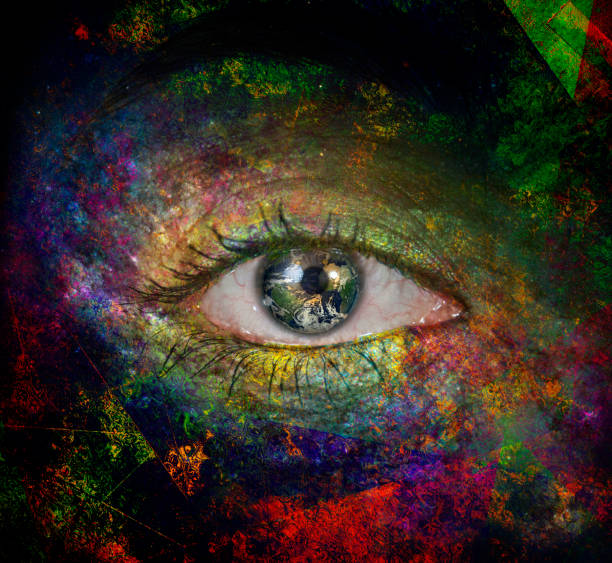
To observe like an artist is to engage with the world not as a passive receiver of information, but as an active, curious, and empathetic participant in a continuous visual dialogue. It transcends mere looking, which is a biological function, and enters the realm of seeing—a conscious, interpretive act. This mode of observation is not an innate talent reserved for the gifted few, but a cultivatable practice, a deliberate slowing down and deepening of perception that seeks to understand the essence, rather than just the label, of what lies before us.
At its core, artistic observation is an exercise in dismantling assumptions. The average glance is efficient; it categorizes quickly—a tree, a face, a street—and moves on, satisfied with the general identifier. The artist’s gaze, however, resists this shorthand. It asks: What kind of tree? How does the late afternoon light gild the specific texture of its bark? How do its leaves interact with the wind, not as a mass, but as thousands of individual dancers? This process involves stripping away the preconceived symbol of the object to encounter its unique, present reality. The artist sees the particular curve of a slouched shoulder that speaks of weariness, not just “a person sitting.” They notice the symphony of muted colors in a shadow, not just an absence of light.
This deepened seeing is inherently connected to relationships. An artist observes the world as a complex web of connections—of light and shadow, positive and negative space, lines that lead the eye, and colors that converse or clash. They perceive how the crimson of a geranium flower vibrates against the grey of a rain-soaked wall, or how the empty space around a solitary figure on a bench holds as much narrative weight as the figure itself. Observation becomes about context and interaction, understanding that no element exists in visual isolation. The negative space defines the positive form; the background influences the foreground. This holistic view transforms a scene from a collection of objects into a composed and interconnected whole, full of dynamic tension and harmony.
Furthermore, to observe like an artist is to embrace a quality of emotional and sensory receptivity. It involves engaging all the senses to inform the visual. The artist might note how the harsh cry of a gull sharpens the bleakness of a coastal scene, or how the remembered scent of rain on hot pavement infuses a sketch of a city street with atmosphere. There is an empathetic dimension, too—a willingness to feel into a subject, whether it’s the dignified decay of an old barn or the anxious energy of a crowded train station. This observation records not just physical data, but mood, story, and intangible feeling, seeking the poetry within the prosaic.
Crucially, this mode of observation is inseparable from curiosity and wonder. It is the practice of finding the extraordinary in the ordinary, the monumental in the minute. The artist finds a universe in the crack running through a pavement, the elegant calligraphy of bare branches against a winter sky, or the play of reflections in a droplet of water. This cultivates a mindset that approaches the familiar with a sense of discovery, always asking “what if?” and “why?”. It is a lifelong commitment to being a student of the visual world.
Ultimately, to observe like an artist is to practice a form of mindful presence. It is to quiet the internal noise and truly attend to the spectacle of the present moment. This practice enriches not only artistic creation but the very experience of being alive. It forges a deeper, more intimate connection with our environment, fostering both awe and understanding. By learning to see the shadows, connections, stories, and beauty that casual looking overlooks, we do more than create art—we transform our daily perception into a more vivid, engaged, and meaningful encounter with the world. The artist’s eye, therefore, is not a privileged lens, but an invitation to a more deeply lived life, one attentive, wondrous glance at a time.