The Art of Creative Borrowing: Building on Others’ Ideas to Boost Your Own
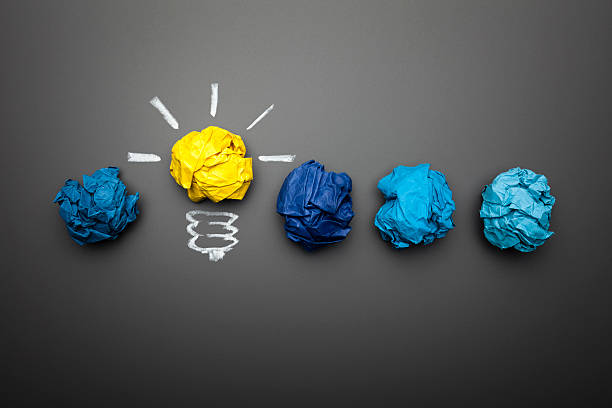
Every creative person has faced the blank page. But the most productive artists, inventors, and problem-solvers rarely start from scratch. They build on what others have already done. This isn’t cheating. It is how culture grows. From the Beatles sampling classical riffs to Tesla opening its patents for anyone to use, the most surprising breakthroughs often come from taking someone else’s idea and adding a fresh twist. When you explore new experiences, one of the most powerful ways to do that is by paying close attention to what others have made and then constructing something new on top of it.
The history of innovation is a long chain of borrowings. Isaac Newton famously said he saw further by standing on the shoulders of giants. He did not invent calculus from nothing; he refined the work of earlier mathematicians. The same is true in music. Jazz musicians take a standard tune and improvise over the chords, building new melodies from an existing structure. Hip-hop producers dig through old records, lift a drum break or a bass line, and layer their own beats and lyrics on top. What emerges is not a copy. It is a transformation. The original idea becomes a springboard, not a cage.
To build on others’ ideas effectively, you need to let go of the myth that creativity is a solo act performed in isolation. The most fertile creative environments are often the most open. The open-source software movement is a perfect example. Programmers share code, fix each other’s bugs, and add features that others can use freely. Linux, the operating system that runs most of the internet, was built by thousands of people building on each other’s work. Any single developer could have written only a fraction of it. By borrowing and improving, they created something far larger than any individual could manage.
You can apply this principle to your own work, no matter what field you are in. Start by collecting raw material. Keep a physical or digital file of things that catch your eye: a clever line from a book, a color combination in a photograph, a layout in a magazine, a product design that solves a problem in an elegant way. Do not worry about being original yet. Just gather. Then, when you need an idea, pick two or three pieces from your collection and ask yourself how they might fit together. What happens if you put the structure of a sonnet into a business memo? What if you combine the visual style of a 1960s poster with the functionality of a modern app? This kind of cross-breeding often produces results that feel fresh precisely because they are built on proven foundations.
Many creative people worry that borrowing ideas is a form of theft. But there is a clear difference between copying and building. Copying reproduces the original with little change. Building takes the essence and transforms it into something that reflects your own perspective. The writer William S. Burroughs used a cut-up technique, literally cutting newspapers into pieces and rearranging them. The resulting texts were not stolen. They were new compositions made from existing material. In the visual arts, the collage movement did the same thing. Painters cut images from magazines and pasted them together to create scenes that had never existed before. The key is to add your own voice, your own context, your own purpose.
A practical way to start is to find a piece of work you admire and remake it in your own style. Take a short story and rewrite it as a poem. Take a recipe and turn it into a set of instructions for a DIY project. Take a famous speech and deliver it as a monologue for a different character. This exercise forces you to understand the original deeply because you have to decide what to keep and what to change. That act of selection and adaptation is where creativity lives.
The open-source model also suggests that you should share your own work if you want others to build on it. When you release something incomplete or imperfect, you invite collaboration. People will see possibilities you missed. They will take your idea in directions you never imagined. This is the opposite of guarding your work like a secret. It is an act of generosity that often leads to unexpected returns. Many successful products, from the bicycle to the smartphone, have evolved through a cycle of one person improving on another’s design, then someone else improving that improvement.
Fear of being derivative can paralyze you. But the truth is that every creative act is a response to something that came before. Your job is not to create something completely original. Your job is to create something that feels true to you while standing on the shoulders of everyone who inspired you. The next time you feel stuck, look at what others have done. Do not imitate. Borrow the bones and build your own flesh around them. That is the art of creative borrowing, and it is one of the most reliable tools for boosting your own imagination.
Articles