The 5-Minute Sprint: How a Tight Timer Forces Better Creative Decisions
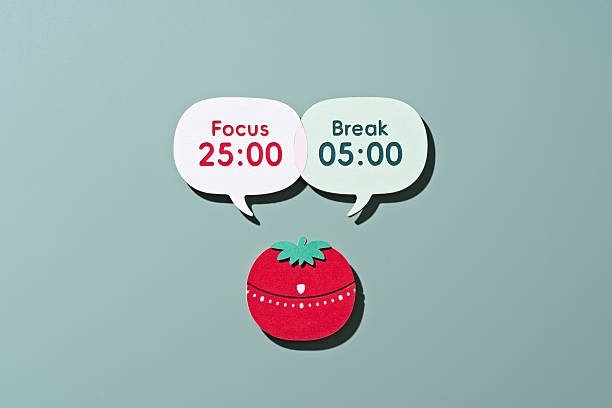
Most people assume that creativity needs time. The comfortable chair, the open afternoon, the blank page waiting for inspiration to strike. In practice that setup rarely delivers. What does deliver is the opposite: a hard deadline so short that your brain has no chance to overthink, second-guess, or chase perfection. A tight timer is one of the most effective tools you can use to force your mind into a productive, improvisational state. It works because it removes the luxury of hesitation and replaces it with the necessity of action.
Consider the common problem of generating ideas for a logo. If you sit down with a few hours to design the perfect mark, you will likely produce one or two concepts, polish them endlessly, and end up frustrated because nothing feels right. Now try something different: set a timer for five minutes. In that time, sketch ten completely different logo thumbnails. Do not erase. Do not pause to judge. Draw a circle, a triangle, a squiggle, a letterform, an abstract shape, a mascot, a symbol from nature, a geometric pattern, a negative space trick, and a combination of two of those. The timer forces you to move before your inner critic can sabotage you. By the time the alarm rings, you have ten raw possibilities sitting on the page. More importantly, you have broken the paralysis of the blank page. Some of those thumbnails will be terrible, but one or two will contain a seed worth pursuing. The tight timer has done what hours of staring could not: it has given you material to work with.
The same principle applies to writing. If you need a headline for an ad campaign, give yourself three minutes. Write down six versions, even if they feel silly. The first two will be clichés. The third will be slightly better. The fourth might be weird. The fifth could be a breakthrough. The sixth will surprise you. Without the timer, you would have spent those three minutes agonizing over the first line, never reaching the fifth or sixth. The timer is a constraint that forces you to exhaust the obvious ideas quickly so that the unexpected ones have room to appear.
Why does this work? The creative brain has two modes: deliberate and spontaneous. Deliberate mode is slow, analytical, and critical. It is useful for editing but deadly for generating raw material. Spontaneous mode is fast, associative, and free. It does not care about quality; it cares about quantity. A tight timer knocks you out of deliberate mode and into spontaneous mode. You can always come back to edit later, but you cannot edit a blank page. The timer guarantees that you produce something, and that something is almost always more original than what you would have produced at a leisurely pace.
The constraint of the timer also forces you to embrace imperfection. Many creative people are held back by a fear of making bad work. The timer removes that fear because you have no time to worry about whether an idea is good or bad. You simply have to get it down. In that rush, your brain makes connections it would normally suppress. A sketch that looks like a child’s drawing might reveal a clever typographic shape. A tagline that sounds ridiculous might contain a pun that works perfectly. The timer does not guarantee that every result is usable, but it guarantees that you have results to choose from.
To get the most out of this tool, set your timer for a length that feels uncomfortably short. Five minutes for a set of thumbnails, three minutes for a list of headlines, ten minutes for a first draft of a paragraph. The goal is to push your pace beyond your comfort zone. If you feel panicked, you are doing it right. Panic forces your brain to bypass the filter of self-criticism. Do not stop to polish anything. Do not go back to fix a line or redraw a shape. Keep moving forward. The only thing that matters is the output count.
After the timer rings, step away for a minute. Then come back and look at what you have. You will almost always find at least one idea worth developing. Sometimes you will find three. And even on days when everything looks useless, you have lost nothing but a few minutes. Compare that to the hours you might have wasted staring at a blank screen.
A tight timer is not a magic wand. It is a simple constraint that reshapes your relationship with the creative process. It turns the vague fear of making a mistake into the concrete goal of producing something fast. It breaks the cycle of perfectionism and opens the door to experimentation. Whether you are a designer, writer, musician, or problem-solver, the technique works because it taps into a basic truth: you cannot wait for inspiration. You have to build a structure that forces inspiration to show up. And a tight timer is one of the best structures you can build.
Articles