Overcoming the Obstacles to Creative Collaboration
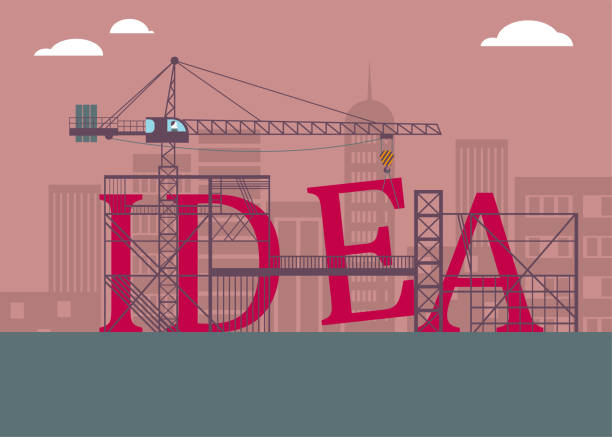
The journey from a promising idea to a tangible reality is rarely a straight path. While the initial spark of inspiration can be electrifying, the process of building upon that idea, of nurturing it through collaboration and critical development, is often where progress stumbles. Common barriers, both psychological and practical, can stifle this essential phase, leaving potentially transformative concepts to wither. Understanding these impediments is the first step toward fostering an environment where ideas can truly flourish.
One of the most pervasive barriers is the fear of judgment, often manifesting as a fear of failure or ridicule. In many environments, whether corporate or academic, there exists an unspoken pressure for ideas to be fully formed and flawless from the outset. This perfectionist culture discourages the sharing of nascent, half-baked thoughts—precisely the kind that need collaborative input to grow. Individuals may self-censor, worrying that their contribution will be seen as silly or uneducated, thereby halting the iterative process before it even begins. This fear is frequently compounded by a culture of ego, where individuals become possessive of their initial concepts, viewing constructive criticism as a personal attack rather than an opportunity for refinement. When an idea becomes tied to one’s identity, the collaborative building process is perceived as a threat.
Closely linked to this is the problem of poor communication and active listening. In meetings or brainstorming sessions, participants are often more focused on formulating their own next point than genuinely engaging with what others are saying. This leads to a phenomenon known as “idea stacking,“ where individuals simply present disconnected thoughts rather than listening, absorbing, and then extending the concepts presented by others. The absence of a shared vocabulary or framework can further muddy the waters, causing collaborators to talk past each other. Without the skills of paraphrasing, questioning for clarity, and building with phrases like “Yes, and...“ instead of “But...,“ ideas remain isolated islands rather than forming a cohesive continent.
Organizational structures and workflows themselves can create significant practical barriers. Excessive bureaucracy, rigid hierarchies, and siloed departments physically and procedurally separate people who could contribute diverse perspectives. An idea generated in a marketing team might die on the vine because there is no clear, low-friction channel to share it with the product development team. Similarly, a relentless focus on immediate tasks and short-term deliverables—the tyranny of the urgent—crowds out the time and mental space necessary for the slow, often messy work of developing new concepts. When every moment is scheduled for execution, none remains for exploration.
Furthermore, a lack of psychological safety within a team is a fundamental roadblock. Psychological safety, the shared belief that one can take interpersonal risks without fear of negative consequences, is the bedrock of effective idea-building. Without it, individuals will not offer wild suggestions, point out potential flaws, or challenge the status quo. Teams that lack trust default to safe, incremental thinking. The leader’s role is critical here; if they dismiss contributions, take credit for others’ ideas, or create a competitive atmosphere, they actively dismantle the safety required for collaborative innovation.
Finally, resource constraints, both real and perceived, can prematurely limit creative expansion. The immediate declaration, “We don’t have the budget for that,“ or “We tried that before,“ can shut down an idea’s growth at the conceptual stage. While practical constraints are ultimately real, introducing them too early in the building process can kill creativity. It shifts the mindset from “What is possible?“ to “What is immediately feasible,“ often truncating the exploration of truly novel pathways that might have led to more efficient or revolutionary solutions.
Ultimately, building on ideas is a social and psychological process as much as an intellectual one. It requires an environment that consciously mitigates fear, prioritizes deep listening, designs for cross-pollination, and cultivates trust. By recognizing and addressing these common barriers—from the fragility of the human ego to the inertia of organizational systems—we can create the conditions where initial sparks are not just protected, but systematically fanned into flames. The goal is to replace a culture of idea ownership with one of shared stewardship, where the collective focus is on nurturing the best possible outcome, regardless of its precise origin.
Articles