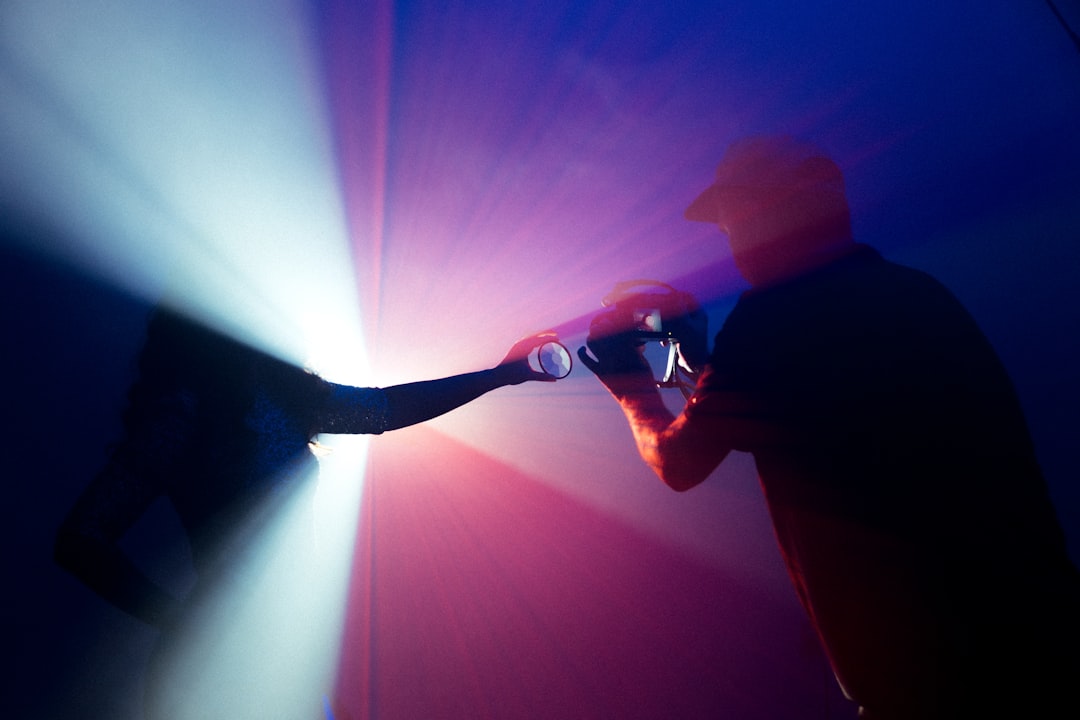
Let Your Body Lead: Why Dancing Without a Script Unlocks Original Ideas
You are sitting at your desk, staring at a blank page or an empty canvas. The harder you try to think of something new, the more your mind circles back to the same tired solutions. You have read the books, tried the prompts, and forced yourself to brainstorm. Nothing sticks. Then someone puts on a song with a beat that makes your foot tap. You stand up, not thinking, and just start moving. Within thirty seconds, a strange image flashes in your head. Within a minute, you have a half‑formed idea that feels alive. This is not coincidence. Dancing freely to music is one of the most direct ways to break the mental logjams that kill creativity, and it works because it bypasses the part of you that tries too hard.
The brain loves patterns. When you work in the same chair, at the same desk, using the same tools, your neural pathways grow deep grooves. Those grooves are efficient for routine tasks, but they are death for original thinking. Free dance jolts your system out of those grooves. You are not following a choreographed routine, so your body has to make thousands of tiny decisions per second. Which way to turn, how fast to move, whether to sink low or stretch high. That improvisational decision‑making engages parts of the brain that normally lie dormant during desk work, particularly the cerebellum and the basal ganglia, which handle timing, coordination, and prediction. As your body moves in unpredictable ways, your mind follows suit. New connections form because you are literally creating new physical patterns that have never existed in your muscle memory before.
This is not a mystical process. It is a simple mechanical reset. When you dance without a script, you stop judging your movements as good or bad. The same self‑judgment that kills a painting halfway through or stops a writer mid‑sentence gets silenced because you are too busy staying on your feet. That suspension of evaluation is exactly what every creative person needs. The inner critic is the enemy of the first draft, the rough sketch, the initial chord progression. Dancing freely trains your brain to produce without editing. Over time, that skill transfers back to your primary creative work.
Many successful artists have used movement to break through blocks. The choreographer Twyla Tharp famously starts every day with a box and a set of physical rituals that get her body moving before she even thinks about dance. She calls it the warm‑up, but it is really a signal to the brain that play is allowed. The writer Maya Angelou rented a hotel room in her own town and walked there every morning. She did not dance, but she understood that moving through space changed her mental landscape. Dancing does the same thing but faster, because the music provides a rhythm that anchors your attention and frees your associative mind.
Try a simple experiment the next time you feel creatively stuck. Put on a piece of music you have never danced to before. It does not matter if it is electronic, classical, jazz, or pop. Close your eyes and let your body respond without any plan. Do not worry about looking good. Do not worry about hitting the beat. Let your hips sway, your arms flail, your feet shuffle. Stay with it for at least five minutes. During that time, your breathing will deepen, your heart rate will rise, and your blood will pump oxygen to your brain. Then, when the song ends, sit down and write or draw or code whatever comes to mind. Notice how the first few sentences or lines are different from what you would have produced if you had stayed in your chair.
The reason this works so reliably is that dancing freely combines physical exertion with non‑verbal expression. Words and logic are left‑hemisphere heavy. Movement is whole‑brain. When you dance, you activate your sensory cortex, your motor cortex, your emotional centers, and your memory networks all at once. That full‑brain activation is the mental equivalent of opening every window in a stuffy room. Fresh air rushes in, and with it, fresh ideas.
Do not be fooled by the simplicity of the act. Dancing freely to music is not a frivolous break or a waste of time. It is deliberate practice for the creative mind. The next time you hit a wall, stand up, press play, and let your body take the lead. The idea you have been searching for is already waiting in the movement your brain has not yet made.
Articles