
Juggling: A Surprising Path to Creative Thinking
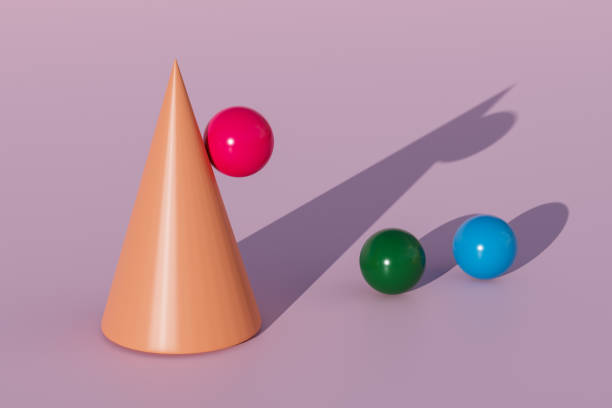
You have probably seen a juggler at a street fair or in a circus, tossing colorful balls or clubs in a smooth, hypnotic loop. It looks like a party trick, something that takes years of practice and a certain natural gift. But what if juggling were not just a spectacle, but a direct route to sharper, more original thinking? For anyone trying to break out of a creative rut, learning to juggle might be one of the most practical and unexpected tools you can pick up. It forces your brain to operate in a way that mirrors the very process of generating new ideas: constant adaptation, tolerance for failure, and a willingness to let go of control.
At its core, juggling is a physical exercise in balance and coordination. You stand with your feet planted, your eyes tracking multiple objects, and your hands moving in a rhythm that feels unnatural at first. The key is not to grip the balls tightly but to let them fall into your palms with a soft touch. This requires a delicate interplay between your visual system and your motor skills. When you drop a ball — and you will drop many — your instinct is to lunge for it, to correct the mistake immediately. But that usually makes things worse. The trick is to stay relaxed, reset, and try again. That lesson alone is invaluable for creative work. Most of us freeze when an idea fails or a project stalls. We try to force a solution, gripping the problem too tightly. Juggling teaches you that dropping the ball is not a disaster; it is just information. You learn what angle, what speed, what hand position works better next time. That feedback loop is identical to the way you iterate on a rough draft or a design sketch.
What makes juggling especially powerful for creativity is that it demands your full attention in the present moment. You cannot think about tomorrow’s deadline or last week’s critique while you are keeping three balls in the air. The mind has to be fully engaged with the immediate task. This state of focused now-ness is the same condition that allows creative insights to bubble up. When you are completely absorbed in a physical pattern, the logical part of your brain quiets down, and the associative, intuitive part gets room to roam. Many jugglers report that after a session, they feel mentally clear and more open to unexpected connections. It is not magical — it is just that you have given your brain a break from its usual chattering, and it rewards you with fresh perspective.
Another way juggling boosts creativity is by training you to handle chaos gracefully. The pattern of a cascade is repetitive, but every toss is slightly different. Wind, fatigue, or a slight misstep can send a ball off course. The skilled juggler does not panic; they adjust mid-motion, shifting their body or changing the trajectory of the next throw. This is exactly what creative people need to do when an idea veers in an unplanned direction. Instead of trying to force it back to the original plan, you learn to ride the deviation and see where it leads. That flexibility is the hallmark of original thinking. Juggling also strengthens your peripheral awareness. While your eyes focus on the apex of each toss, your hands are catching and throwing in your peripheral vision. You learn to trust your instincts and respond without overthinking. In creative work, that translates to trusting your first impulses and not second-guessing every move.
Starting to juggle does not require any special equipment or athletic ability. You can begin with three rolled-up socks or small beanbags. The classic three-ball cascade is the most straightforward pattern to learn. There are countless video tutorials online that break it down into small steps. Most people can make their first successful juggling sequence of three throws and catches within a few days of short practice sessions. The key is to practice in short bursts — five or ten minutes a day — rather than long, frustrated sessions. Your brain learns the rhythm best when you give it frequent, low-pressure exposure. As you improve, you might try juggling while walking or standing on one foot, adding an extra layer of balance challenge. You could even juggle to a steady beat of music, which ties in rhythm and coordination even more deeply.
The creative benefits do not stop with juggling itself. The skills you develop transfer to other areas of your life. You become more comfortable with uncertainty. You learn that mistakes are stepping stones, not stop signs. You discover that a calm, playful attitude yields better results than a tense, perfectionist one. And you gain a concrete, physical reminder that creativity is not a mysterious gift — it is a practice, built on balance, coordination, and the willingness to drop the ball and pick it up again.
Articles