Join a Recreational Volleyball Team to Shake Up Your Creative Process
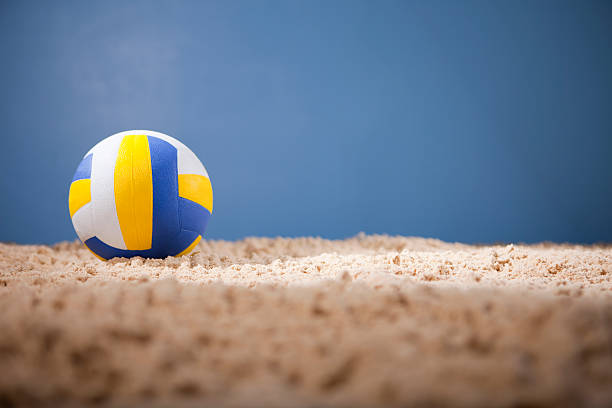
You have spent the last three hours staring at a blank screen, a half-finished canvas, or a chord progression that refuses to resolve. Your brain feels like a worn-out rubber band. The usual tricks—a fresh cup of coffee, a walk around the block, rearranging your desk—have failed you. It is time to try something that has nothing to do with your craft. It is time to join a recreational volleyball team.
Volleyball, when played for fun in a community league or a casual Sunday afternoon pick-up game, is not about spikes and championships. It is about movement, unpredictability, and the kind of low-stakes pressure that forces your mind off its usual rails. And that is exactly what a stuck creative needs.
When you step onto a volleyball court with a group of strangers or casual acquaintances, your brain has to solve a completely different set of problems. Where is the ball going? How should you position your body? Is your teammate about to set the ball or dump it over the net? These decisions happen in seconds. There is no time to overthink. You react, you adjust, you breathe. In the middle of a long rally, your prefrontal cortex—the part of your brain that handles planning and self-criticism—takes a back seat. That is the same part that often keeps you trapped in perfectionism or writer’s block. When you are focused on not letting that orange ball hit the sand or the gym floor, you stop judging your own ideas. You just move.
This shift is not mystical. It is practical. The creative class—designers, copywriters, musicians, filmmakers—spends most of the workday inside their own heads. You chase the perfect word, the exact shade of blue, the right note. That inward focus can tighten into a knot. A volleyball game forces your attention outward. You must read the body language of the other players. You must communicate with a quick shout of “Mine!” or “I got it!” You must trust that the person next to you will cover the open space. That social coordination is a kind of play that your brain rarely engages in while sitting alone at a drawing table.
After the game, something interesting happens. The raw, sensory experience of movement and teamwork leaves a residue in your mind. Your neural networks, exhausted from the physical effort, become more flexible. You might find yourself on the drive home thinking about a project from a completely different angle. The problem that seemed impossible two hours ago now feels manageable. That is because you allowed your brain to run a different set of programs. You gave it input from your muscles, your peripheral vision, your sense of timing. That input feeds back into your creative work in ways you cannot control directly.
There is also the matter of failure. In a recreational volleyball game, nobody expects perfection. You will shank a serve. You will miss a dig. Someone will accidentally hit the ball into the net on the third touch. And you will laugh about it. That low-stakes failure is medicine for the creative ego. In your studio, a failed draft can feel catastrophic. On the court, it is just a point for the other team. You reset, you bump the ball back over, and you keep playing. Learning to treat your creative mistakes the same way—as temporary setbacks that earn you a do-over—is a skill that volleyball practices without you even trying.
The physical environment matters too. A volleyball court is a defined space with clear boundaries, yet within that space the possibilities are endless. The ball can come at any angle. The wind, if you are playing outdoors, will curve the ball in unexpected ways. The sunlight might blind you for a moment. That unpredictability trains your brain to stay loose, to anticipate without rigidity. Creatives who work in structured disciplines—architecture, coding, screenwriting—often struggle with rigidity. They want a formula that guarantees a good outcome. Volleyball reminds you that the best plays are often improvisational. You react to what is actually happening, not to what you expected.
Joining a team also introduces you to people who think differently than you do. The graphic designer on your team might be paired with a nurse, a mechanic, and a yoga instructor. Each of them reads the game from their own perspective. Watching how a person with no artistic background decides where to place the ball can teach you something about pattern recognition. It can show you a style of decision-making that is not rooted in aesthetic judgment but in pure utility. That contrast can slip into your creative thinking without you realizing it, loosening up your own stubborn preferences.
The ritual of showing up every week at the same time, putting on a jersey, and going through the same warm-up drills creates a rhythm that is separate from your creative routine. That rhythm becomes a container. Inside it, you are not a writer or an artist. You are a setter or a hitter or a server. That break in identity is refreshing. It lets your creative self rest and replenish, like fallow ground.
So the next time you hit a wall, do not reach for another book on technique or another podcast about inspiration. Reach for your gym bag. Find a local recreational league, or even just a group of friends who play at the park. Let the ball come at you. Let yourself mess up. Let yourself move. The ideas that felt stuck will start to roll again, not because you forced them, but because you gave them room to breathe.
Articles