How Unfamiliar Rhythms Rewire Your Creative Instincts
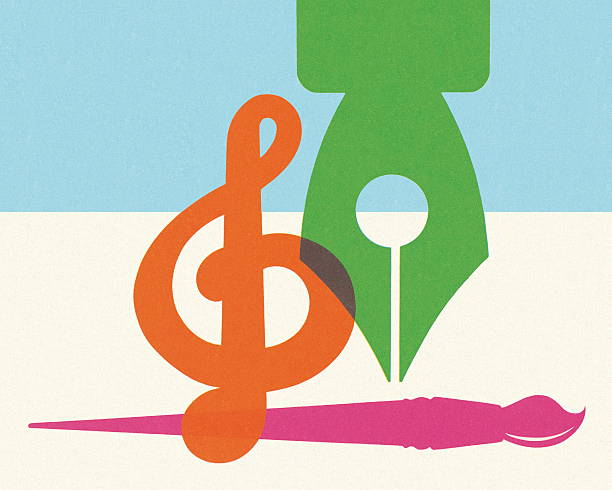
Every creative professional knows the feeling of hitting a wall. You stare at a blank canvas, a blinking cursor, or an empty notebook, and the usual tricks fail. You change your workspace, take a walk, or switch from coffee to tea. But there is a simpler, more direct tool sitting inside your headphones: music you have never heard before. Not a remix of an old favorite or a new hit from a familiar artist, but something genuinely foreign to your ears. A Balinese gamelan orchestra. A field recording of Japanese bamboo flute. A crackling 1970s Congolese soukous track. When you listen to a genre you do not understand, your brain has to work differently. And that difference is exactly what your creative engine needs.
The problem with listening to the same music day after day is that your brain learns to predict it. You know when the chorus is coming. You anticipate the key change. You hum along automatically. That predictability is comfortable, but it also puts your brain into a lazy groove. Your auditory cortex processes the sound with minimal effort, and the rest of your mind drifts into familiar patterns of thought. Creativity thrives on surprise, on the moment when your expectations are overturned and you have to build a new mental model on the fly. Unfamiliar music delivers that surprise constantly. The rhythms do not match your internal metronome. The scales use notes you cannot name. The vocal style sounds like crying, shouting, or whispering in a language you do not speak. Your brain has no script. It has to pay attention, analyze, guess, and adapt. That active listening is a workout for your creative muscles.
Think about rhythm. Most Western pop music uses a steady 4/4 time signature with a backbeat on two and four. Your body knows that pulse. But try listening to a piece of traditional Bulgarian folk music in 7/8 time, or a Turkish song in 9/8. Your foot will not know where to land. Your brain must constantly recalculate the downbeat. This mental recalibration is not just a curiosity. It forces your neural networks to form new connections. When you later return to your own creative work, that heightened state of problem-solving and pattern recognition carries over. You find yourself more willing to try unusual structures, to break a routine, to approach a problem from an angle you would have dismissed yesterday.
Harmony is another area where unfamiliar genres shake things up. Western music is built on major and minor scales and chords that follow well-known progressions. If you have heard a thousand pop songs, you have internalized the circle of fifths. But dive into Indian classical music and you encounter ragas, which are not scales in the Western sense but melodic frameworks with specific ascending and descending patterns, ornamentations, and emotional associations. A raga is designed to evoke a particular mood or time of day. It does not resolve the way a Beethoven symphony does. Listening to it, your sense of musical tension and release is reprogrammed. The same happens with the microtones in Arabic maqam or the dissonant clusters of early avant-garde jazz. These sounds teach your ear that beauty does not require resolution in the way you are used to. This lesson spills directly into your creative work. You become more comfortable with ambiguity, with unfinished edges, with ideas that do not fit neat categories.
Texture and timbre also matter. The sound of a kora (a West African harp-lute) is plucked and ringing, completely unlike a guitar. The raw rasp of a Bulgarian gaida bagpipe or the metallic clang of a Thai ranat ek xylophone gives you sonic colors you have no words for. Your brain stores these new sounds as sensory data points. Later, when you are writing a story, designing a product, or composing a visual composition, you may unconsciously reach for an equivalent of that texture. A writer describing a rainstorm might find the words sharper and more metallic after a week of listening to Indonesian gamelan. A graphic designer might start using asymmetrical spacing that feels like the unexpected accents in a Cuban rumba. The sensory palette expands.
There is also the psychological effect of not understanding the lyrics. Most of the music you love has words that carry meaning, stories, emotions tied to language. When you listen to a song in Norwegian or Swahili or Quechua, you hear the voice as pure instrument. The melody, rhythm, and emotional delivery become the primary carriers of feeling. This frees your mind from the narrative constraints of lyrics. You can project your own thoughts onto the sound. Many songwriters find that listening to music in unknown languages helps them break out of cliché phrases. The same principle applies to other creative fields. By stripping away verbal meaning, you access a more primal, intuitive layer of creative inspiration.
To make this practice work, treat it like a deliberate exercise. Do not just put on a random Spotify playlist in the background. Set aside twenty minutes. Close your eyes. Listen actively. Notice the moment your brain tries to predict the next note and fails. Notice the feeling of mild disorientation. Resist the urge to label the music as “weird” or “bad.“ Just let it wash over you. Over a few weeks, rotate through different unfamiliar genres. Try Finnish tango. Try Mongolian throat singing. Try Japanese noise music. Try Andean panpipe ensembles. Each one will teach your brain a new way to organize sound. And each lesson will subtly reshape the way you generate ideas.
The next time you feel stuck, do not reach for your favorite playlist. Reach for something you do not understand. Let the alien rhythms reset your inner clock. Let the strange harmonies loosen your grip on convention. Creativity is not about knowing what works. It is about discovering what could work. And there is no faster way to discover than by listening to music you have no idea how to follow.
Articles