How to Generate Fresh Ideas by Remixing Vintage Postcards
Every creative person has hit that blank page moment where nothing flows. You stare at your notebook, cursor blinks, brushes sit dry. One of the most reliable ways to break that freeze is to take something that already exists and let it become the foundation for something entirely new. That is the essence of building on others’ ideas—not copying, but using their work as a springboard. A surprisingly rich source for this practice is the humble vintage postcard.
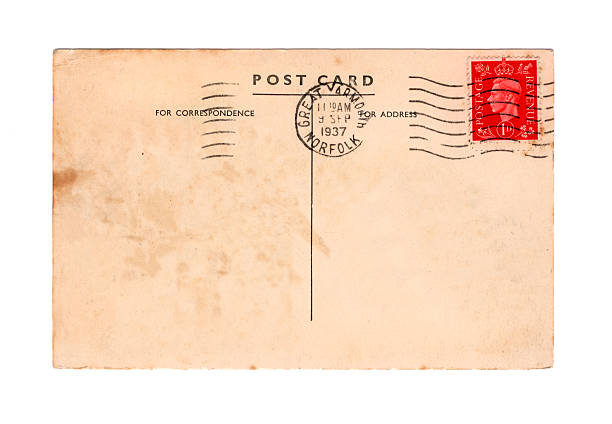
Think about what a postcard holds. It carries a photograph or an illustration from a specific time and place. On the back, someone wrote a short message, usually mundane—a note about the weather, a quick hello, a complaint about a train delay. That combination of image and personal scribble is a ready-made story seed. Your job is to grow it into something that never existed before.
Start by collecting a small stack of old postcards. You can find them at flea markets, thrift stores, or online archives. Do not worry about condition. Creases, faded ink, even a coffee stain add character. Lay them out and pick one that grabs you for no clear reason. Maybe it is a black-and-white photo of a diner in 1950s Ohio. On the back, a woman wrote to her sister: “Wish you were here. The pie is awful but the view makes up for it.”
Now, do not just read that message and move on. List what you do not know. Where is the sister? Why is she not there? What view is the writer talking about—the diner’s window overlooking a lake, or something more personal? The phrase “the pie is awful” becomes a clue. Who made the pie? Was it a deliberate statement or a joke? Take that thin scrap of a moment and ask yourself: if this were the opening line of a short story, what happens next? Write a scene where the narrator is the waitress who baked that pie, or a traveler who overheard the comment and became curious about the person who wrote it.
The method works because the postcard gives you constraints. You cannot invent the setting from scratch—it is pinned to a real place and era. You cannot change the sender’s voice, only amplify it. That limitation forces your imagination to push against a solid wall, and that tension produces more original results than absolute freedom ever does.
Try a different approach with another card. Take a postcard of a crumbling castle in Ireland from the 1930s. The message says only: “Arrived late. Key was under the mat. See you tomorrow. Love, P.” That brevity is an invitation. Write a detective story where P never showed up the next day. Or turn it into a horror piece where the key under the mat opens something that should have stayed locked. The historical photograph anchors the story in a believable world, while the missing details demand you fill them in. You are not stealing P’s idea; you are using it as a trampoline.
This habit of building on others’ work does not have to stay in writing. If you paint, use the postcard’s composition but shift the color palette wildly. Paint the diner scene in neon greens and purples, or turn the castle into an underwater ruin. If you make music, assign each postcard a song title from its message, then write a short instrumental piece that captures the mood you imagine from the image. If you work in collage, cut the postcard into pieces and reassemble it with other found imagery. The goal is not to preserve the original—it is to let it decompose into something new.
Avoid the trap of feeling guilty about using someone else’s material. Every creative tradition is built on borrowing. Blues musicians lifted riffs. Poets responded to other poems. Filmmakers remade old scripts. The difference between plagiarism and genuine creation is how much of yourself you pour into the transformation. When you take a 1940s postcard from a stranger and turn it into a graphic novel about two sisters separated by war, nobody could have predicted that outcome but you. That is original.
As you practice, you will notice something. The postcards stop being mere prompts. They become collaborators. You start to read between the lines of the handwriting, to notice details in the photograph that the original photographer probably ignored. That scratch on the corner of the diner window—could it be a bullet hole? The barely visible figure in the castle doorway—who was that person? Your imagination wakes up because it has real data to work with, not abstract concepts.
Eventually, you might start documenting your own observations in postcard form. Take a photo of your own street, write a cryptic message on the back, and mail it to a friend. Then ask your friend to send back a story based on it. The exchange becomes a loop of building on each other’s ideas. That is where creativity stops feeling like a solitary struggle and starts feeling like a conversation.
The next time you feel stuck, skip the blank page. Reach for a postcard. Read the stranger’s words. Look at their forgotten vacation snapshot. Then ask yourself: What if I finished what they started? You will likely surprise yourself with what comes out.
Articles