How Thinking Like a Gardener Can Grow Your Creative Ideas
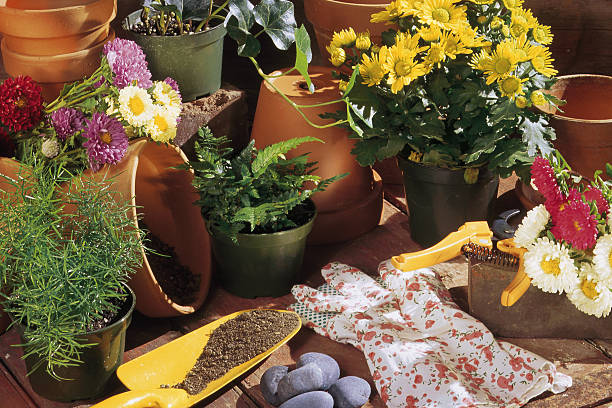
A gardener does not force a seed to become a tree. They prepare the soil, plant the seed at the right depth, water it consistently, and give it sunlight. Then they wait. They prune, they weed, they protect the plant from pests. But they never yell at the seed to grow faster. This patience and process is a powerful analogy for how creativity actually works. When you treat your ideas like living plants instead of widgets to be manufactured, you stop forcing breakthroughs and start cultivating them.
The core of analogical thinking is taking a system you understand well and mapping its structure onto a problem you do not yet understand. Gardening is a rich domain for this because almost everyone has some experiential knowledge of it, either from a backyard, a balcony pot, or even a video game. The gardener’s mind operates on cycles, seasons, and symbiotic relationships. Your creative mind does the same, though you may not notice it.
Start with the soil. A garden’s soil must be fertile, loose, and well-drained. In creativity, your “soil” is the raw material you feed your brain. This includes books you read, conversations you have, podcasts you listen to, experiences you seek out, and even the boredom you allow yourself. If your soil is compacted with only work emails and news headlines, nothing new will root. The analogy tells you that you need to deliberately enrich your mental soil by exposing yourself to diverse inputs before you even try to “grow” an idea. A gardener would never plant seeds in concrete. A creative person should not expect fresh ideas from a mind filled only with the same routines.
Now consider the seed. In gardening, a seed is a tiny bundle of potential. In creativity, the seed is a half-formed thought, a fleeting observation, or a question that nags at you. It may seem worthless at first. A real gardener does not throw away every small seed that looks wrinkled. They plant it anyway, because they know that the potential is invisible. When you have a vague idea, treat it as a seed. Write it down. Give it a small place in your schedule. Do not judge it yet. The analogy protects you from the common mistake of only pursuing ideas that already look impressive. Many great innovations began as odd little seeds that no one took seriously.
Water and sunlight are the equivalent of focused attention and time. A gardener does not water a seed once and expect a full harvest. They water regularly. For creative work, “watering” means returning to the idea repeatedly, even when it does not feel productive. It means thinking about it during a walk, doodling it in a notebook, talking it over with a trusted friend. Sunlight is the exposure to feedback and real-world constraints. A plant needs light to photosynthesize; an idea needs to see the light of reality through testing, prototyping, or discussion. The analogy reminds you that ideas need both patient care and external input. Too much water drowns the roots; too much sunlight burns the leaves. You must find the right balance between protecting your idea and exposing it to criticism.
Weeding is another critical step. In gardening, weeds compete for nutrients, water, and space. In creative work, weeds are the doubts, distractions, perfectionism, and irrelevant side projects that steal energy from your main idea. The gardener does not become angry at weeds; they simply pull them out routinely. Apply this to your creative process. Set aside time each week to identify the mental weeds. That voice that says “this idea is stupid” is a weed. That tendency to check social media instead of working on your draft is a weed. Pull them without drama. The analogy helps you see that weeding is not punishment; it is maintenance.
Pruning is more advanced. A gardener cuts back healthy branches to encourage the plant to grow stronger and more fruitfully. In creativity, pruning means letting go of parts of an idea that you love but that do not serve the whole. Maybe you have a brilliant sub-concept that makes the main story confusing. Cut it. Maybe a feature in your product is clever but complicates the user experience. Remove it. Pruning feels painful, but the analogy shows that you are not destroying your work; you are helping it grow toward its best form. A tree that is never pruned becomes tangled and weak. A creative project that never prunes becomes bloated.
Finally, the gardener knows that some plants do not survive, and that is okay. Seedlings fail due to weather, pests, or bad soil conditions. A gardener does not take it personally. They compost the failure and use it to enrich the soil for next season. Similarly, not every creative idea will become a finished work. Some will die mid-development. The analogy teaches you to treat those failures as compost, not garbage. What did you learn? What new connections did you make? That knowledge feeds your next idea. Over time, your mental soil becomes richer and richer.
The beauty of the gardening analogy is that it removes the pressure to be instantly brilliant. Instead of expecting a lightning bolt of inspiration, you accept that creativity is a slow, seasonal process that requires preparation, patience, and maintenance. You stop blaming yourself when an idea does not bloom overnight. You start asking, “Is my soil ready? Am I watering enough? Do I need to prune?”. That shift alone can unblock a stuck creative mind faster than any tip or technique.
Next time you feel stuck, do not force a breakthrough. Go outside, look at a garden, and ask yourself what your idea needs today. The answer will often surprise you.
Articles