How Slacklining Can Unlock Your Creative Potential
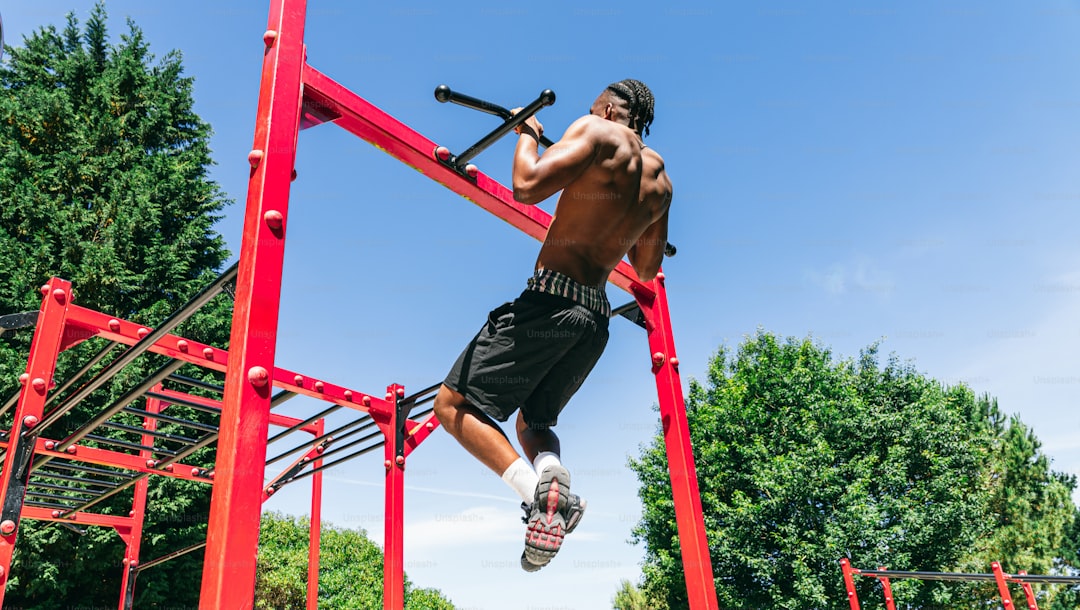
Most people think of creativity as something that happens inside the head. A sudden flash of insight. A clever connection between two unrelated ideas. A breakthrough that arrives while you’re staring at a blank page. But what if the fastest way to become more creative has nothing to do with thinking harder and everything to do with learning to stand on a wobbling piece of webbing suspended between two trees? Slacklining—the practice of walking or balancing on a flexible, tensioned rope or strap—is one of the most effective and least obvious ways to boost your creative abilities. It forces your brain to operate in a mode that is essential for original thinking: constant, real-time problem solving under conditions of uncertainty.
When you step onto a slackline for the first time, your body immediately rebels. The line shakes, your ankles wobble, your arms flail. Your mind shouts instructions—shift left, drop your hips, look forward—but nothing works. You fall off. You get back on. You fall again. This cycle is not failure. It is the raw material of creativity. Every time you lose your balance, your brain must assemble a new strategy. It cannot rely on old habits because the slackline changes every second. The tension varies. A gust of wind pushes you. Your own muscles fatigue and tremble. There is no fixed solution to the problem of staying upright. You have to invent one on the spot, over and over.
That constant invention is exactly what creativity requires. Creative work is not about having a single brilliant idea and executing it perfectly. It is about responding to a moving target—an evolving project, a shifting audience, an unexpected constraint. Slacklining trains you to thrive in that environment. It teaches your nervous system to stay calm while the ground beneath you (or the line beneath your feet) is unstable. Instead of freezing or panicking, you learn to micro-adjust continually. Those micro-adjustments are the physical equivalent of the iterative process that leads to innovative solutions in writing, design, music, or business. You try something, it doesn’t work, you adjust, you try again. Each fall is just data.
The mental state that slacklining cultivates is often called “flow” in common language, but it is simpler than that. It is the state of being fully present. When you are on the line, you cannot think about your to-do list or the meeting you have later. You cannot rehearse a conversation in your head. You cannot worry about the past. The line demands your complete attention. That intense focus is a rare resource in modern life, where distraction is the default. By practicing balance and coordination on the slackline, you are essentially giving your brain a workout in concentration. And that concentration carries over to creative work. You become better at sitting with a difficult problem without reaching for your phone or scrolling for a quick dopamine hit.
There is another less obvious benefit. Slacklining forces you to use both sides of your body in a dynamic, non-repetitive way. Most people have a dominant hand, a dominant foot, a dominant eye. The slackline punishes dominance. If you favor your right leg, you will tilt and fall. You must learn to engage your left side equally. That cross-body coordination is a known catalyst for new neural connections. It is not about becoming ambidextrous in the circus sense. It is about breaking the asymmetry that your daily life reinforces—sitting at a desk, typing with one hand, carrying a bag on one shoulder. When you physically balance yourself, you are also balancing the way your brain processes information. You start to see problems from angles you had ignored because your dominant mental pathways were too comfortable.
Perhaps the most powerful creative lesson from slacklining is the acceptance of instability itself. Most people treat instability as a threat. They want certainty. They want a plan. They want to know that if they do A, B will happen. Creativity is the opposite. It requires you to stand in the wobble and trust that you will find your footing. Slacklining makes that wobble visible and even enjoyable. After enough practice, you stop fearing the shake. You learn to work with it, to use the line’s own tension to rebound into a stable position. That is exactly how creative breakthroughs happen. You don’t suppress chaos. You ride it.
You do not need to become a expert slackliner to gain these benefits. Even ten minutes of practice a few times a week can shift how your brain approaches uncertainty. You will find yourself more willing to try unconventional solutions in your work, less afraid of looking silly, more patient with failure. The line is a low-stakes teacher. If you fall, you just get back on. No one judges you. The only pressure is the one you put on yourself. That freedom to fail repeatedly is the hidden engine of real creativity.
In a world that tells you to optimize, streamline, and perfect, slacklining invites you to wobble. And in that wobble, you will discover ideas you never knew you had.
Articles