How Meditating on a Single Flower Can Unlock Creative Breakthroughs
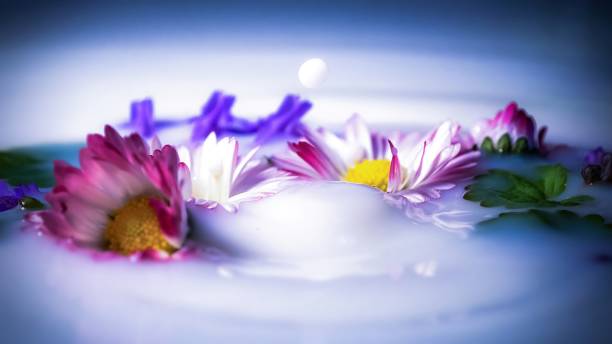
Pick a flower. Any flower will do, though one with distinct petals, a clear center, and a bit of texture works best. Place it on a table in front of you, at eye level, in good light. Now look at it. Not a glance, not a quick study. Look at it as if you have never seen a flower before, as if this one is the first flower that has ever existed. This is the practice of meditating on a single object, and it is one of the most direct ways to pull yourself out of a creative rut without needing to adopt any special beliefs or terminology.
When you stare at that flower for ten or fifteen minutes, your mind does not want to cooperate at first. It will try to name the flower, categorize its color, recall a memory of a garden, or wonder how long you have to sit there. That is normal. The point is not to empty your mind. The point is to keep pulling your attention back to the physical details you can see, smell, and even feel if you dare to touch a petal. Notice the way light falls across the surface, the tiny veins in the leaf, the subtle gradient from one shade of red to another, the dust on the stamen. Each time your thoughts drift to an idea about the flower, bring yourself back to the flower itself. This is not relaxation for relaxation’s sake. It is a workout for your attention.
Why does this matter for creativity? Because creativity lives in the gap between what you expect and what you actually see. Most of the time you look at the world through a filter of assumptions. You see a flower and your brain quickly labels it, files it, and moves on. That efficiency is great for getting through a busy day, but it is death to original thinking. When you force yourself to hold your attention on one object for an extended period, you start to notice things your brain normally skips. The petal edge is not smooth, it is serrated. The color is not uniform, it has a darker ring near the base. The stem has tiny hairs. These details are not interesting in themselves, but they shake your brain out of its routine. They force your visual system to make new connections, and that mental flexibility carries over into your work.
Designers often talk about the need to see the world like a beginner. Meditating on a single flower is a structured way to practice that beginner’s mind. You do not have to sit in a lotus pose or chant. You just need to look. After a few sessions, you will find that your eye starts hunting for overlooked details in other contexts. You will notice the grain of the paper in your sketchbook, the way light bounces off your computer screen, the pattern of cracks in a sidewalk. That kind of noticing is the raw material of creative work. A writer might describe a character’s hand as “blunt as a tulip bulb” only after spending time really looking at a tulip bulb. A designer might choose a shade of green for a logo because they observed exactly how a leaf catches afternoon sun. These small observations accumulate into a personal visual vocabulary that no one else has.
There is also a practical benefit for the working creative. When you are stuck on a problem, the temptation is to think harder. You open more tabs, read more articles, make more lists. Sometimes the opposite approach works better. By focusing your mind on something completely unrelated to your project, you give the creative part of your brain a chance to work in the background. While you study the flower’s petal, your subconscious is free to shuffle ideas, make unexpected connections, and spit out a solution when you least expect it. This is not mystical. It is simply that sustained attention on a simple object clears the mental clutter. The loud chatter of deadlines, self‑doubt, and to‑do lists quiets down. In that silence, a new thought can surface.
Do not worry about doing it the right way. The flower does not care. Choose a fresh one if you prefer, or a dried one, or even a photograph if you have nothing else. Set a timer for ten minutes and stop talking to yourself. When you catch yourself planning your dinner or rehearsing a conversation, just go back to the flower. That returning motion is the whole practice. Over time, you will notice that the flower changes. The light shifts, a petal droops, a shadow deepens. Your mind will start to see it as a living thing rather than a symbol. This is exactly the shift that helps you break through creative blocks. You stop looking for the idea and start looking at the thing itself. The ideas come later, on their own.
When you finish, do not rush to your work. Let the afterimage of the flower stay with you for a few minutes. Make a quick sketch or jot down any stray thoughts. You might be surprised at what surfaces. A connection between the curve of a petal and the curve of a chair arm. A color combination you never considered. A word that seems to fit the feeling of that flower’s weight. None of this is accidental. You have trained your brain to attend more closely, and that attention is the single most useful tool for anyone who makes things.
Articles