How Analogies Unlock Understanding of Complex Subjects
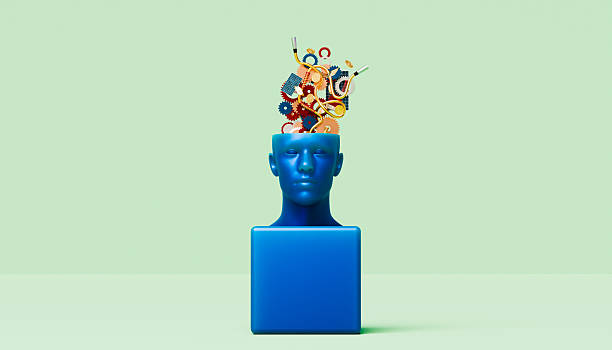
At the heart of human cognition lies a powerful, almost instinctual tool for making sense of the unfamiliar: the analogy. By drawing parallels between a new, complex concept and something already known and intuitive, analogies serve as cognitive bridges, transforming the daunting into the comprehensible. They are not mere decorative language but fundamental instruments that aid in learning complex subjects by leveraging existing knowledge, illuminating abstract principles, and fostering deeper conceptual frameworks.
The primary mechanism by which analogies function is through the transfer of understanding from a familiar source domain to an unfamiliar target domain. When a student first encounters the intricate flow of electricity, the concept can seem abstract and impenetrable. However, by introducing the analogy of water flowing through pipes—where voltage is akin to water pressure, current to flow rate, and resistance to the pipe’s narrowness—the learner instantly has a mental model. They can visualize and reason about electrical circuits using pre-existing intuitions about how water behaves. This mapping allows the brain to bypass the initial hurdle of pure abstraction, grounding the new knowledge in sensory and experiential understanding. The complex subject does not become less intricate, but the learner now possesses a scaffold—the analogy—upon which to hang the technical details and mathematical formulas.
Furthermore, analogies excel at making intangible or invisible processes concrete. In biology, explaining the selective permeability of a cell membrane is challenging. Comparing it to a bouncer at a nightclub, selectively allowing some molecules to enter while denying others, instantly creates a vivid and memorable image. The bouncer analogy encapsulates the core function—selectivity based on specific criteria—in a universally understood scenario. Similarly, in computer science, explaining a firewall by comparing it to a security guard checking identification at a building’s entrance demystifies a technical term for novices. These analogies act as conceptual anchors, providing a stable reference point that learners can return to when details become overwhelming. They compress complexity into an essence that is easier to recall and manipulate mentally.
Beyond initial comprehension, well-constructed analogies promote deeper conceptual integration and critical thinking. A powerful analogy does more than provide a one-to-one correspondence; it invites exploration of its limits. A teacher comparing an atom to a miniature solar system provides a crucial entry point, but a sophisticated learner will soon question where the analogy breaks down—electrons do not orbit in neat planar circles like planets, and they exist as probability clouds. This process of identifying the analogy’s boundaries is itself a profound learning exercise, forcing the student to refine their understanding and distinguish between the helpful model and the nuanced reality. It encourages learners to move beyond rote memorization toward a more flexible and accurate mental model of the subject.
However, the efficacy of an analogy hinges on its careful selection and deployment. A poorly chosen analogy, one where the source domain is itself unfamiliar or where the mapping is flawed, can generate misconceptions. The goal is to find a source concept that is genuinely well-understood by the audience and whose structure aligns robustly with the target concept’s core logic. When successful, the analogy becomes a catalyst for “aha” moments, where confusion gives way to clarity.
In essence, analogies are the mind’s native language for grappling with complexity. They allow us to navigate new intellectual territory by using the landscape of our existing knowledge as a guide. By building bridges from the known to the unknown, making the abstract tangible, and stimulating analytical thought about the models themselves, analogies are indispensable in education. They transform learning from a passive reception of facts into an active process of connection and discovery, proving that to understand the most sophisticated ideas, we often need to see them reflected in the familiar world around us.
Articles