How a Well-Organized Creative Space Sharpens Your Best Ideas
Walk into a truly productive artist’s studio, a writer’s office, or a designer’s workshop, and you will notice something that contradicts the old myth of the scattered genius. It is not always spotless, and it rarely looks like a furniture showroom, but there is a deliberate order sitting just beneath the surface. Brushes are rinsed and standing in the right jars. Cords are coiled and labeled. Reference books have a home. The creative mind thrives on exploration, but it stumbles badly when it has to waste precious energy hunting for a missing tool or wading through yesterday’s debris. Organization within a creative space is not about turning your desk into a sterile operating room. It is about removing the small, constant frictions that drain momentum before an idea ever gets a chance to breathe.
The most immediate enemy of a good session is visual static. When your desk, studio table, or digital desktop is buried under layers of unrelated junk, your eyes never truly rest. You sit down intending to sketch, but instead you spot an unopened bill, a coffee mug from three days ago, or a stack of notes you meant to file weeks ago. Each of those items tugs at the corner of your attention, pulling your thoughts away from the work in front of you. A clear surface acts like a calm horizon. It does not force your brain to process and dismiss clutter before it can focus. That does not mean the space must be empty. A well-organized desk might have a sketchbook, a favorite pen, a reference image pinned to the wall, and nothing else that is not serving the current project. That kind of intentional setup sends a quiet, powerful signal: you are here to make something, and the room is ready to help.
Tools and materials are the physical vocabulary of any craft. When those tools are scattered, hidden inside drawers crammed with unrelated items, or tangled in a pile of cables, starting to work becomes an obstacle course. A woodworker who cannot find a chisel because it is buried under sawdust loses not just five minutes of searching but also the fragile thread of concentration that held the project’s next step together. A photographer who has to dig through a bag of loose memory cards and dead batteries feels their enthusiasm leak away before a single image is captured. Organization eliminates these speed bumps. Keeping supplies in designated containers, labeling shelves, and returning every item to its fixed spot after use transforms the workspace from a source of frustration into a silent partner. You reach for what you need, and it is there. The motion becomes muscle memory, allowing your conscious mind to stay inside the creative problem instead of wrestling with the physical world.
A similar principle applies to the digital realm, which is every bit as real as the physical one for today’s creative class. A desktop littered with hundreds of unnamed screenshots, folders named “misc,” and email inboxes choked with unread newsletters is a creativity killer. Digital disorganization forces you to spend creative time playing archivist, scrolling hopelessly for that one client brief or the perfect reference photo you saved three months ago. A logical folder structure, clear file-naming habits, and a ruthless weekly cleanup routine keep your digital tools sharp. When your assets are easy to find, you can pull them into your work without breaking your rhythm. The goal is to make the act of saving and retrieving so simple that it never becomes a reason to procrastinate or interrupt a flow of good ideas.
Beyond objects and files, a creative space benefits immensely from an organized relationship with time. A workshop that is tidy but has no clock, no visible project calendar, and no staging area for active versus future jobs easily becomes a museum of half-finished experiments. Organization extends to the horizontal surfaces where projects live. Designing a zone for raw materials, a separate area for work currently in progress, and a shelf for finished pieces creates a natural rhythm in the room. You do not have to shuffle piles of supplies just to make a flat spot to work. When current projects are visible and contained, you can see at a glance what needs attention, and you are far less likely to abandon something good simply because it got buried under a fresh delivery of canvas or lumber.
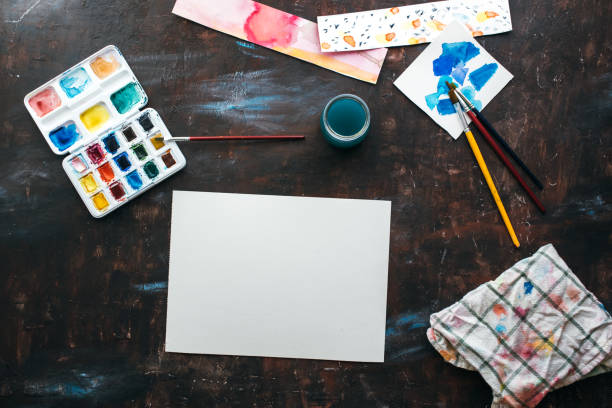
There is an important line to draw here, because many creative people rightfully push back against the idea of a rigid, museum-like environment. A sterile white box can drain the senses just as surely as chaotic mess can. The kind of organization that helps creativity is loose enough to let the work show its fingerprints. A painter might have a wall spattered with test strokes and a cart of messy tubes arranged only in a way that makes sense to them. That is still organization. It becomes disorganization only when empty tubes stay mixed with full ones, old rags bind to palettes, and nowhere clean remains to mix a fresh color. External order is not an aesthetic; it is a readiness to act. When a space is organized, it actively invites you to begin. You can walk into it, see exactly what is available, and pick up exactly where you left off without first performing cleanup duty.
There is also a quiet confidence that comes from a space that respects your work. A chef keeps their station immaculate because they know clear ground is the foundation of speed and flavor. A musician organizes pedals and cables on a board so the set flows without awkward pauses. The same applies to illustrators, architects, potters, and screenwriters. When your materials, your reference, and your time are arranged thoughtfully, you are telling yourself that the work matters enough to deserve a clean stage. That mindset keeps you showing up, and showing up consistently turns sporadic inspiration into reliable output.
At its heart, organization in the creative space is a form of self-respect. It is not about denying the messy, unpredictable nature of making art. It is about giving that messy, unpredictable process a sturdy container in which to unfold. Build the shelves, label the bins, clear the deck, and then let the work get wild. When the tools are ready, the mind is free to wander into interesting territory without tripping over last week’s chaos. That is how order, ironically, becomes one of the best tools for producing work that feels alive, urgent, and completely unforced.
Articles