
How a Slow Walk in the Woods Can Unlock Your Next Big Idea
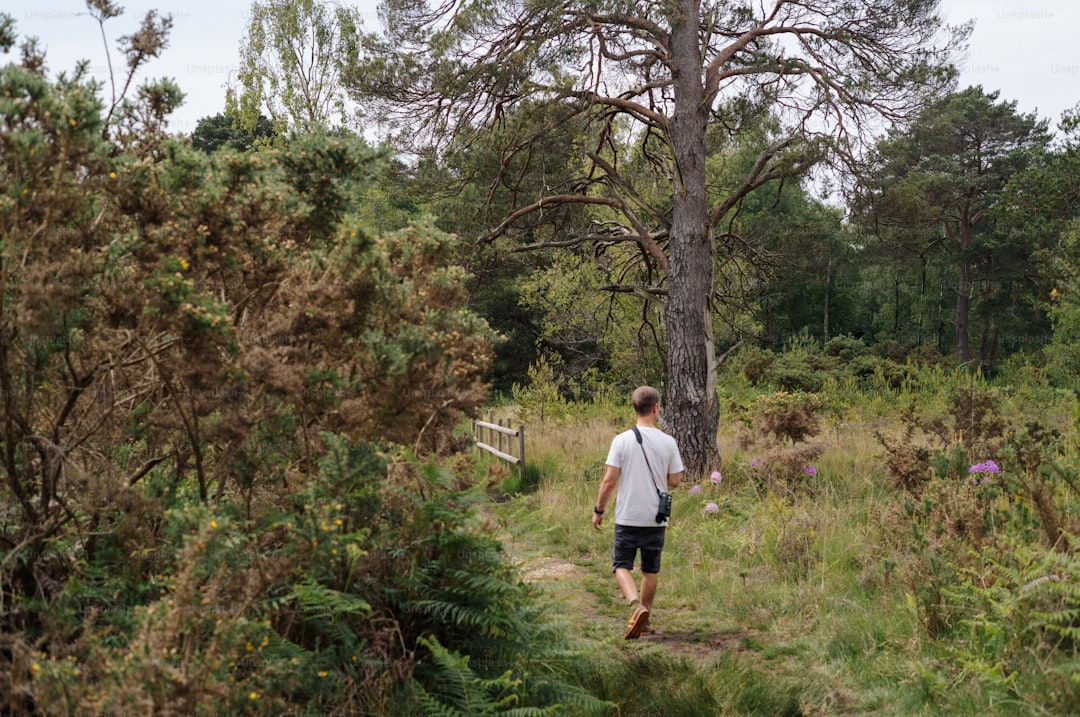
You have been staring at the blank page for an hour. The cursor blinks, unimpressed. The coffee is cold. Your brain feels like a blocked drain. Every creative person knows this moment. The usual tricks—listening to music, switching projects, talking it out—have failed. It is time to leave the desk. But not for a power walk with headphones blasting a podcast. That just feeds the noise. Instead, try something that sounds almost too simple to work: a slow, aimless walk in nature where the only rule is to pay attention. Not to thoughts. Not to problems. To the world around you.
This is not a mystical practice. It is a practical method for shaking loose the grip of habitual thinking. When you walk in nature without a destination, without a phone in your hand, something shifts. Your eyes stop scanning for notifications and start registering the actual world. The angle of light falling through the leaves. The way a fallen branch curves like a question mark. The sound of gravel crunching underfoot, each step a tiny percussion. These are not distractions. They are raw material for the imagination.
The creative brain thrives on novelty. But most of our daily environment is repetitive. The same coffee cup, the same screen, the same four walls. Your neural pathways become ruts. A mindful walk through a natural space forces you out of those grooves because nature is never the same twice. The wind changes. A bird lands nearby. The smell of pine shifts with humidity. Your senses, dulled by indoor predictability, wake up. That alertness is the same state of mind that artists and inventors describe when a breakthrough arrives: a heightened awareness of connections, patterns, and possibilities that were invisible before.
Consider what happens when you really look at a single leaf. Not at the whole tree, not at the forest. Just one leaf. Notice the veins branching from the stem, each one splitting and splitting again like a river delta. Notice the edge, serrated or smooth. The color, not just green but a mixture of yellow, brown, and traces of red. The tiny tear where an insect bit through. In that focused observation, your mind has stopped its internal chatter. It is fully engaged with something real. That state—call it flow, call it presence, call it whatever you like—is the same state where ideas arise without effort. The leaf itself is not the idea. But the habit of noticing deeply trains your brain to find novelty everywhere. And novelty feeds creativity.
There is a reason that so many writers, musicians, and designers swear by daily walks. But the key is the word mindful. A mindless walk with earbuds in, replaying the same problems, does not help. A mindful walk is deliberate. It means shifting your attention from the inner monologue to the outer world. Feel the temperature on your skin. Listen for the highest-pitch bird call and the lowest. Notice how the path winds and why it might have been worn that way. Do not try to solve anything. Just observe. The solution will often arrive on its own, like an unexpected guest, when you have stopped chasing it.
Nature itself offers a kind of instruction in creative process. Observe how a vine finds its way up a tree trunk, curling left, then right, adjusting to the light. That is problem-solving without force. Watch how water flows around a stone, not fighting it but finding a new path. That is adaptation. Creative blocks often come from trying to push through obstacles straight on. A mindful walk teaches you to flow around them, to notice the gaps. The next time you are stuck, do not try harder. Go outside. Walk slowly. Look for something you have never seen before, even in a place you have visited a hundred times. It will be there, waiting. And so will your next idea.
Articles