
Harnessing the Drowsy Mind: Capturing Ideas from the Hypnagogic State
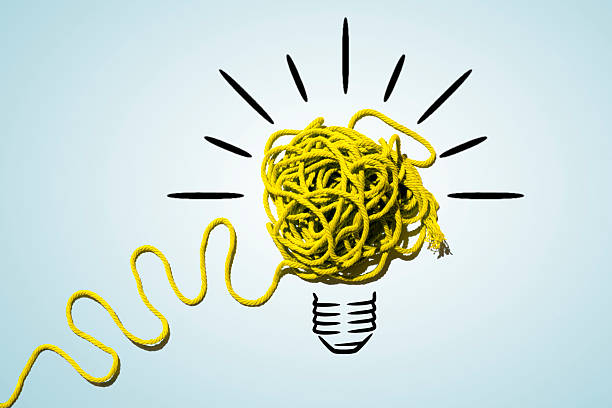
Every creative person knows the feeling. You are lying in bed, drifting toward sleep, when suddenly a vivid image flashes behind your closed eyes, a melody loops in your head, or a solution to a stubborn problem pops up fully formed. You tell yourself you will remember it in the morning, but by the time your alarm rings, the idea has vanished like morning fog. That twilight zone between wakefulness and sleep is called the hypnagogic state, and it is one of the richest, most underused sources of original thinking available to anyone who sleeps.
This half-awake, half-dreaming state lasts only a few minutes during the transition from waking to sleeping. In that window, your conscious mind loosens its grip, and the logical gatekeeper that usually filters out strange associations takes a break. Images, sounds, fragments of conversation, and even complete narrative scenes can arise without effort. Your brain is still active, but it is operating in a different mode, one that favors connection over critique. The result is a stream of raw, unfiltered material that can feed painting, writing, music, invention, and problem-solving.
Why does this happen? During the hypnagogic period, your brain is shifting from beta waves, which dominate focused attention, to alpha and theta waves, which are linked to relaxation, daydreaming, and memory consolidation. This is not a mysterious spiritual process. It is a biological fact that your brain is busy sorting through the day’s experiences and linking them to older memories. In doing so, it creates novel combinations that your waking self would never think to try. The creative class has long recognized this gift. Salvador Dalí used a technique he called “slumber with a key.” He would sit in a chair holding a heavy metal key over a plate. As he nodded off, the key would drop and clatter on the plate, waking him just in time to capture the hypnagogic imagery before it slipped away. Thomas Edison did something similar with ball bearings in his hand. These methods were not gimmicks; they were deliberate tools to harvest the weird, spontaneous output of the drowsy mind.
To capture ideas from your own hypnagogic state, you do not need keys or ball bearings, though you can adapt those tricks. The simplest method is to keep a notebook or a voice recorder on your nightstand. When you feel yourself slipping into that loose, dreamy state, resist the urge to fully commit to sleep. Instead, let your mind wander but keep a tiny thread of awareness. As soon as an interesting image, word, or idea surfaces, reach for your notebook. Do not try to judge it or write a full sentence. Just scribble a few words, a sketch, or a phrase that will trigger your memory when you wake. The key is speed. If you hesitate, the idea dissolves.
A more active technique is to set an alarm for about twenty to thirty minutes after your usual bedtime. Lie down, relax, and allow yourself to drift. When the alarm sounds, you will be jolted out of a very light sleep, often right in the hypnagogic zone. Immediately grab your notebook and write everything you can recall, no matter how trivial or bizarre. You might catch a fragment like “blue horse on a glass staircase” or “the solution uses the word friction.” Later, you can sift through these scraps and see which ones spark something.
Another approach involves waking in the middle of the night. Many people experience a natural hypnagogic period when they return to sleep after waking briefly. Keep a small LED penlight and a notebook next to your bed. When you wake up for a moment, lie still and let your mind float. Do not turn on the main light or look at your phone, as bright light will pull you fully awake and kill the delicate state. Instead, use the penlight to jot down whatever is lingering in your thoughts. Then go back to sleep. In the morning, you will have a record of your half-dreams.
The hypnagogic state is also useful for breaking creative blocks. If you are stuck on a project, try taking a short nap of ten to twenty minutes. As you drift off, hold the problem loosely in your mind. Do not force a solution. Just let the question hang there. When you wake, even if you did not fully sleep, check for any stray ideas that arose. This is not about lucid dreaming or complex visualization. It is about trusting your brain to do its behind-the-scenes work while you relax.
A word of warning: do not try to capture every hypnagogic idea. Some will be nonsense, and that is fine. The goal is to collect many small seeds and later decide which are worth planting. Over time, you will train your mind to treat the drowsy period as a creative workshop rather than a blank void. You will also improve at noticing the moment when the usual mental chatter fades and the unusual patterns begin.
The most important habit is to be gentle with yourself. If you fall asleep without capturing anything, no harm done. The hypnagogic state is a natural part of your sleep cycle, and it will return every night. By simply acknowledging its value and preparing a simple capture system, you turn a passive biological process into an active creative tool. That half-dreamed image of a bridge made of rain, that odd line of dialogue, that sudden insight about a missing step in your design, they are all waiting in the wings. All you have to do is catch them before the curtain falls.
Articles