H1: Meditate On A Single Object: How Focusing On A River Stone Can Unlock Creative Flow
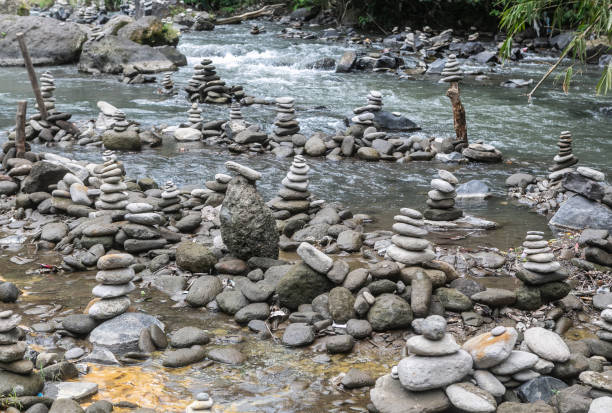
Every artist, writer, or designer has faced the blank page. The cursor blinks. The canvas stays white. Ideas feel like smoke you cannot grab. You try harder, but effort only stiffens your thinking. The most reliable way out of this jam is not to think harder, but to think differently—starting with a single, ordinary object. Pick up a river stone. Smooth, cool, grey, flecked with mica. Hold it in your palm and do nothing else for ten minutes. This simple act of focusing on one thing, without the pressure to produce, is a method that has worked for craftspeople and thinkers for centuries. It is not mystical. It is a brain hack that clears the mental clutter so your best ideas can surface.
When you stare at a river stone, your mind will rebel at first. It will want to drift to your email, the deadline, the noise outside. That is normal. The point is not to silence your thoughts but to keep returning your attention to the stone. Notice the weight in your hand. Trace the veins of quartz with your finger. Look at the tiny pits and scratches that tell the story of its journey down a mountain stream. As you stay with the stone, your internal chatter begins to quiet. This is not about emptying your head; it is about giving your brain a single point of focus so the rest of the system can settle down. When the background noise fades, the subtle ideas that were drowned out can finally be heard.
The reason this matters for creativity is rooted in how your brain works. When you are anxious, distracted, or pushing for a result, your brain goes into a narrow, survival mode called the default mode network. It worries, repeats old patterns, and filters out anything unfamiliar. That is the enemy of originality. By holding your attention on a river stone, you gently shift your brain into a different gear. The same part of the brain that lights up when you daydream or take a shower and get a sudden insight becomes more accessible. This is the state where connections between unrelated things happen naturally. The stone’s texture might remind you of a rough sketch you made years ago. The colour pattern might suggest a new palette for a painting. A faint pressure on your thumb might trigger a memory of holding a favourite tool. These cross-wires are the raw material of creative work.
The key is to treat the stone not as a symbol or a metaphor, but as a physical object you are learning to see again. Most of us stop seeing things after the first glance. We label them and move on. But a creative person needs to see freshly. When you meditate on a stone, you begin to notice details you overlooked: the way light catches the edge, the tiny mineral flakes that glitter like stars, the subtle warmth or coolness of the surface. This re-learning of observation trains your eye and your mind to notice small things everywhere. That skill is directly transferable to your work. A writer who notices the exact shade of light at dusk can describe a scene that feels real. A designer who notices the curve of a pebble can borrow that line for a logo. The practice of seeing deeply is the foundation of all creativity.
Do not expect a big idea to explode in your head during the ten minutes. The benefits often come later, after you set the stone down and return to your work. The focus session creates a kind of mental priming. The next time you sit down to write, paint, or solve a problem, you will find the resistance is lower. The ideas flow more easily because your brain has already been trained to stay present and to notice connections. Many creative professionals use a version of this practice before they begin. A painter might spend five minutes looking at a leaf. A composer might close their eyes and listen to a single note. The river stone is just an example—choose any object that is small, natural, and rich in detail. A shell, a piece of bark, a dried seed pod all work.
You might wonder if this takes too much time when you are already behind. But consider how much time you waste staring at a blank page, refreshing social media, or second-guessing yourself. Ten minutes of focused attention on one object is an investment that usually pays for itself in sharper thinking and fewer false starts. The stone does not judge you. It has no opinions. It simply sits there, unchanged, waiting for you to return. That reliability is calming. It reminds you that not everything needs to be produced, solved, or evaluated right now. The pause is part of the process. Let your mind wander within the small world of the stone’s surface. Let your thoughts rise and fall like water. When you finally pick up your pen, you will find the stream has cleared.
One last note: do not worry about doing it right. There is no right. Your mind will wander a hundred times. Each time you bring it back, you are strengthening the muscle of attention. That is the entire practice. Over weeks, you will notice that you stop less often to check your phone. You will catch yourself daydreaming in a focused way, following an idea without forcing it. The river stone becomes a quiet anchor in a noisy world. And from that stillness, the most surprising ideas can emerge.
Articles