Forging Creativity: What Blacksmithing Teaches the Creative Mind
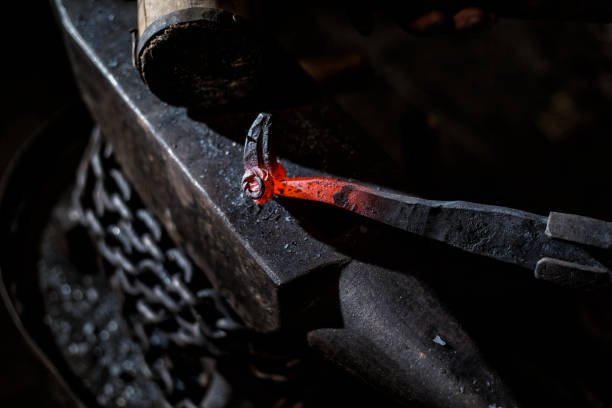
Of all the hobbies a creative person might pick up, few seem as far removed from the daily work of a writer, designer, or musician as blacksmithing. Striking hot metal with a hammer, shoving steel into a roaring forge, and breathing air thick with the smell of burning scale does not immediately suggest a path to better brainstorming sessions or more original illustrations. Yet the discipline of shaping metal by hand offers something more valuable than a change of scenery. It forces the brain to operate in a completely different physical and mental register, and that shift, repeated over weeks and months, rewires how you approach creative problems in every other part of your life.
The first lesson blacksmithing teaches is the relationship between patience and action. In front of a computer, it is easy to click, type, drag, delete, and redraw in seconds. The feedback loop is nearly instant, and that speed can create a kind of frantic searching – a hope that the next idea, the next layer, the next filter will finally yield something good. A blacksmith has no such luxury. A piece of steel must be heated to a precise temperature, usually a bright orange-yellow, before it can be shaped. If you hit too soon, the metal fights back and cracks. If you wait too long, the color fades and the steel becomes stubborn, requiring another trip to the fire. The act of waiting for the metal to come to temperature, of watching the glow deepen and spread, teaches a patience that is not passive but watchful. You learn to read the material instead of forcing your will upon it. That same skill transfers directly to creative work: knowing when to push an idea and when to let it sit, when to heat it up with new research and when to let it cool so you can see its true shape.
Beyond patience, blacksmithing cultivates a deep understanding of failure as data, not devastation. A new hobbyist will miss the hammer, leave the metal too long in the forge, twist a piece that was too thin, or try to make a curve that the steel simply will not accept. Each mistake is immediate and unignorable. The metal does not lie. It does not offer vague feedback like “this doesn’t feel right.” It snaps, bends where you did not intend, or leaves a dent that cannot be filed away. And because the cost of steel is modest and the time invested is measured in minutes, there is little emotional weight in starting over. The smith simply reheats, repositions, and tries a slightly different angle. Over time, this builds a mindset where failure is just another step in the process, not a verdict on talent. Creative people who adopt this attitude stop treating a bad draft or a rejected proposal as a dead end. It becomes a piece of information that tells them where to strike next.
There is also a tactile feedback that cannot be simulated on a screen. When you hammer a piece of hot steel, you feel the vibration travel up your arm. The metal rings or thuds depending on its thickness and temperature. Your body learns to listen to sound and vibration as cues that are more reliable than your eyes. This kind of spatial and bodily intelligence is something most office-bound creatives have allowed to atrophy. Reawakening it by gripping tongs, swinging a hammer, and feeling the heat on your face forces your brain to connect hand and eye and ear in a way that no digital tool can replicate. That cross-wiring in the nervous system has a spillover effect. After an afternoon at the anvil, many people report that their thinking feels clearer, their sketches more confident, and their writing less fussy. The physical activity fills a gap that purely cognitive work leaves open.
Another hidden benefit is the constraint itself. Blacksmithing is governed by physics, temperature, and the limits of a small set of tools. You can only do so much with a hammer, an anvil, and a forge. Those tight boundaries force creative problem-solving. If you want to make a leaf shape for a fireplace poker, you cannot just draw it and print it. You have to think about how to stretch the steel, where to put the taper, how to make the curve without folding the metal. Every step requires a structural logic. That kind of thinking, applied to a creative project, trains you to work within limitations rather than complaining about them. A tight deadline, a limited budget, or a narrow brief becomes a set of constraints that demand a new approach, just like a piece of square stock demands a different hammer angle than flat bar.
Finally, there is the simple pleasure of making something durable. In a world where most creative output is digital, ephemeral, and endlessly reproducible, hammering a coat hook or a bottle opener that you can hold in your hand, give to a friend, or hang on a wall for decades provides a grounding satisfaction. That tangible reward reinforces the effort, making the hobby self-sustaining. You do not have to force yourself to keep going. The metal tells you when you have succeeded, and the object proves it. That feeling of completion, of closing the loop from raw material to finished piece, is something that many creatives have lost in the endless iteration of pixels. Regaining it, even for an hour a week, can restore a sense of purpose and momentum that carries over into less physical work.
For anyone whose creativity feels stuck, stale, or too comfortable, picking up a hammer and heating a piece of steel might seem like an odd prescription. But the mind that learns to read metal, to wait for the right glow, and to treat each miss as information will find that the lessons follow them back to the drawing board, the blank page, or the mixing board. Creativity is not just about having ideas. It is about knowing how to shape them, how to apply the right pressure at the right moment, and how to accept that the material always has a vote. Blacksmithing, in its raw and ancient way, teaches exactly that.
Articles