
Exploring the Five Traditional Human Senses
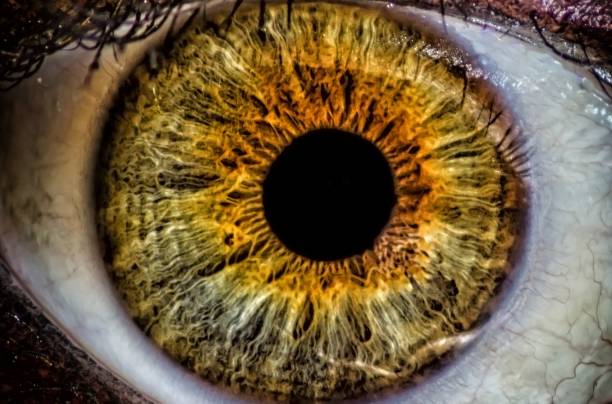
From the moment we are born, our experience of the world is shaped and defined by a remarkable suite of biological instruments: the five traditional human senses. These senses—sight, hearing, taste, smell, and touch—serve as our fundamental portals to reality, gathering raw data that our brain masterfully weaves into the rich tapestry of our conscious existence. For centuries, philosophers and scientists have categorized these senses, recognizing them as the essential means by which we navigate, understand, and find meaning in our environment. Each sense operates through a specialized system, a fascinating interplay of organs, receptors, and neural pathways dedicated to translating specific physical phenomena into the language of perception.
The sense of sight, or vision, is often considered the most dominant for many people. It allows us to perceive light, color, movement, and depth. This complex process begins when light enters the eye through the cornea and lens, which focus it onto the retina at the back of the eye. The retina contains photoreceptor cells called rods and cones; rods are sensitive to light levels, enabling night vision, while cones detect color. These cells convert light into electrical signals that travel via the optic nerve to the brain, which interprets them as the vivid images we see. Hearing, or audition, provides our connection to the world of sound. Sound waves are collected by the outer ear and funneled down the ear canal, causing the eardrum to vibrate. These vibrations are amplified by three tiny bones in the middle ear and transmitted to the cochlea in the inner ear, a fluid-filled, snail-shaped structure lined with microscopic hair cells. The movement of these hairs in response to different sound frequencies generates nerve impulses sent to the brain, allowing us to interpret everything from speech and music to distant thunder.
The chemical senses of taste and smell work in close concert to create the flavors we experience. Taste, or gustation, primarily occurs on the tongue, where clusters of sensory cells called taste buds detect five basic qualities: sweet, salty, sour, bitter, and umami (savory). Meanwhile, the sense of smell, or olfaction, begins in the olfactory epithelium high in the nasal cavity. Here, specialized neurons with odor receptors bind to airborne molecules, sending signals directly to the brain’s limbic system, an area closely associated with memory and emotion. This direct pathway explains why a particular scent can instantly and powerfully evoke a long-forgotten moment. Finally, the sense of touch, also known as somatosensation, is not localized to a single organ but is distributed across the entire body via the skin and some internal tissues. This sense is actually a complex combination of several subsystems, including sensors for pressure, temperature, pain, and texture. Nerve endings in the skin detect these stimuli, relaying information about our physical interactions with objects, the comfort of a warm breeze, or the warning signal of a sharp pain, enabling both delicate manipulation and essential protection from harm.
Together, these five traditional senses form an integrated perceptual system. They rarely operate in isolation; instead, they constantly inform and influence one another. The smell of food enhances its taste, the sight of a speaker’s lips helps us decipher sounds, and the feel of an object complements its visual appearance. While modern science now acknowledges other sensory abilities, such as balance, proprioception (body position), and internal senses like hunger, the classic five provide the foundational framework for understanding human perception. They are the timeless channels through which we receive the symphony of the world, a symphony that the brain composes into the ongoing story of our lives.
Articles