Experiencing Abstract Animation as a Creative Catalyst
Every creative professional knows the feeling of hitting a wall. The words won’t come, the frame won’t compose, the melody falls flat. You need a new angle, a fresh way of seeing, but your brain keeps circling the same tired patterns. One of the most potent tools for breaking that loop is sitting right inside your browser or local video library: abstract animation. Unlike narrative films or instructional videos, abstract animation trades story for sensation. It communicates through pure shape, color, rhythm, and motion. Engaging with this medium on a regular basis can rewild your visual thinking and inject unpredictable energy into your own work.
Abstract animation has no obligation to explain itself. A film by Oskar Fischinger might show colored circles spinning and shrinking to a Bach fugue. A piece by Norman McLaren might scratch lines directly onto film stock, producing frantic, breathing geometries. There is no plot, no character, no setting. Your mind is forced to abandon its normal habit of asking “what happens next?” and instead asks “what do I feel right now?” That shift alone is valuable for anyone who makes things. It trains you to pay attention to the raw ingredients of your medium—line weight, negative space, contrast, tempo—without the safety net of a story to lean on.
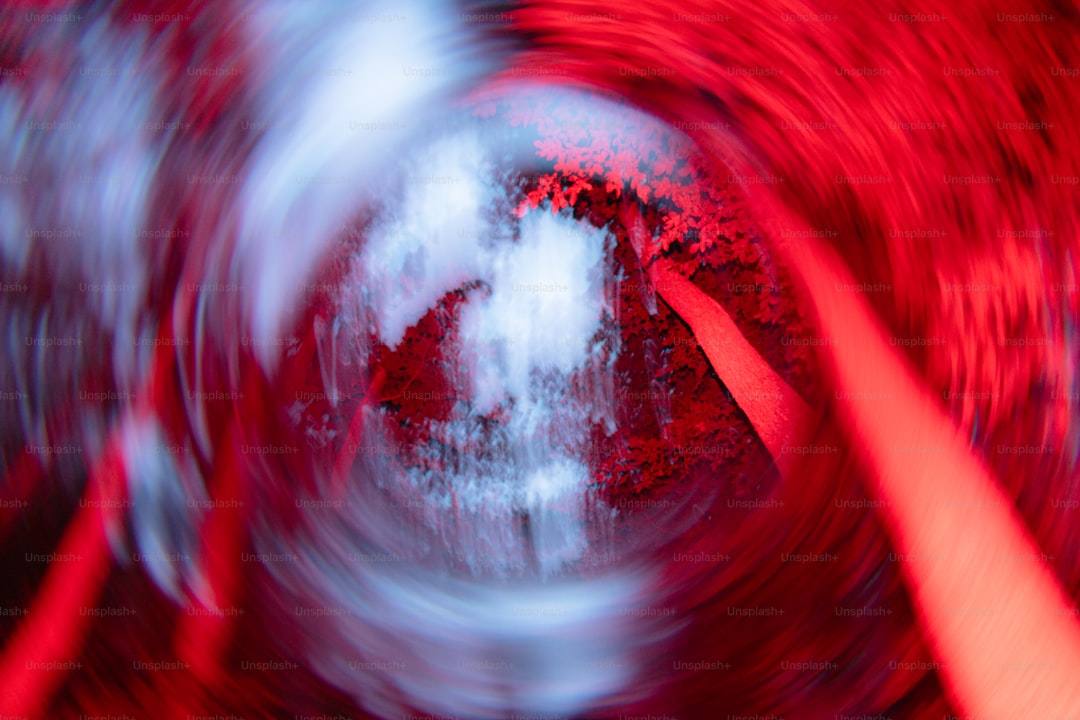
When you watch abstract animation, you are essentially exercising your pattern-recognition muscles in a gym with no windows. The images move in ways that defy real-world physics: shapes melt into one another, colors pulse with their own internal rhythm, and scale changes without warning. Your brain tries to find familiar references—that cloud looks like a face, that curve suggests a wave—but the animation keeps sliding away from easy labels. This tension between order and chaos is generative. It primes you to notice unexpected connections in your own projects. A graphic designer might suddenly see a poster layout in the way two jagged forms fight for space. A musician might hear a rhythm in the flicker of a stroboscopic sequence. A writer might find a metaphor in the way a single line slowly dissolves.
The best part is that abstract animation requires almost no time commitment to be useful. You do not need to watch a ninety-minute feature. Many influential pieces run under five minutes. You can slip one into a break between tasks and let it wash over you. The experience does not demand active analysis. In fact, the less you try to “understand” it, the more it works on your subconscious. Let your eyes follow the motion without judgment. Let the sound—if there is any—fill the room. When you return to your own desk, you will often find that the mental static has settled, and a small, unexpected idea has drifted to the surface.
The medium also teaches you something about constraint. Abstract animators work with a limited vocabulary: shape, color, timing, and transition. Yet within those narrow tools, they produce an infinite landscape of moods and sensations. Watching their work reminds you that you do not need a huge budget, complex tools, or a realistic subject to make something impactful. You just need a clear intention and a willingness to let form lead. This is a liberating lesson for creatives who feel bogged down by the pressure to represent the real world accurately. It is permission to play.
If you are new to abstract animation, start with the pioneers. Fischinger’s An Optical Poem (1938) is a bounding meditation on circles and squares set to Liszt. McLaren’s Blinkity Blank (1955) carves erratic lines into black film stock, resulting in a hypnotic stutter of sound and image. For something contemporary, look up the work of Ryoichi Kurokawa, who combines digital manipulation with natural textures to create eerie, architectural abstractions. YouTube and the Internet Archive hold deep collections. Search for “visual music” or “absolute film” and you will find hours of material.
The real payoff comes when you start applying what you absorb. After a few sessions with abstract animation, you might begin to see your own projects differently. A photographer might notice that a composition works best when it abandons literal subject matter and focuses on the interplay of light and shadow. A composer might experiment with stillness and sudden silence. A writer might try writing a scene that describes only the movement of color across a window, with no characters or dialogue. These experiments are not the final product—they are sketches that feed your larger body of work.
Consuming diverse media formats is not just about switching from books to podcasts. It is about finding forms that challenge the way you process information. Abstract animation does exactly that. It bypasses the verbal, the logical, and the narrative. It speaks directly to your sense of rhythm and your instinct for harmony. Let it into your rotation, and you will find that your creative well becomes deeper, stranger, and more generous.
Articles