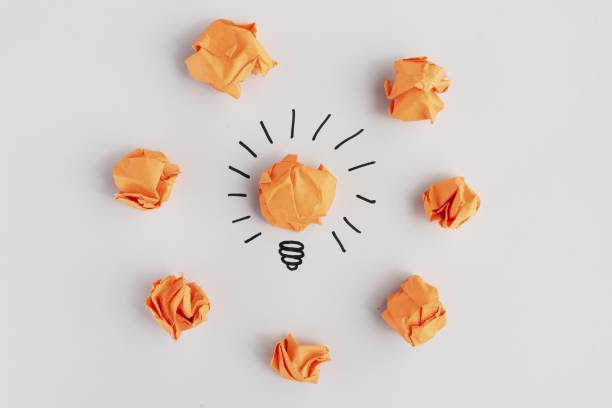
Can Creativity Be Learned or Is It Innate?
The question of whether creativity is a divine spark bestowed at birth or a skill honed through practice has intrigued philosophers, artists, and scientists for centuries. At first glance, the world seems divided between the naturally gifted—the Mozarts and the Picassos—and the rest of us. However, a closer examination reveals that creativity is not a simple binary of innate versus learned; rather, it is a dynamic interplay between inherent predispositions and cultivated skills, firmly suggesting that while certain sensitivities may be innate, the capacity for creative thinking can undoubtedly be learned and nurtured by anyone.
The argument for innateness often points to prodigies and the undeniable role of genetics and personality. Some individuals do exhibit a remarkable, early-flourishing creative aptitude that seems inborn. Neuroscientific studies suggest that creative thinkers may have unique neural connectivity, particularly between the brain’s default mode network (associated with imagination) and its executive control networks. Furthermore, personality traits like openness to experience, which has a heritable component, are strongly correlated with creative output. This evidence supports the idea that a baseline predisposition, a certain cognitive style or sensitivity to the world, can provide a fertile starting point for creative expression.
Yet, to claim creativity is solely innate is to ignore the overwhelming evidence of its cultivable nature. At its core, creativity is less about sudden inspiration and more about the process of making novel and valuable connections. This process can be systematically learned. One can be taught the techniques of divergent thinking, such as brainstorming and mind-mapping, to generate a multitude of ideas. One can learn the importance of deep domain knowledge, as emphasized by psychologist Robert Sternberg, for creativity cannot happen in a vacuum; it requires raw material to recombine. The “10,000-hour rule,“ popularized by Malcolm Gladwell, underscores that mastery in any creative field—from painting to programming—requires immense, deliberate practice. A child may have an innate ear for music, but without learning scales, theory, and technique, they will never compose a symphony.
Moreover, environment and mindset are critical, learnable components. A growth mindset, the belief that abilities can be developed, is a foundational lesson that fosters creative resilience. Cultures and environments that encourage risk-taking, curiosity, and learning from failure directly foster creative output. History is replete with examples of individuals who became creative forces not through early genius, but through persistent exploration, exposure to diverse experiences, and the application of learned methodologies. The entire discipline of design thinking, taught in universities worldwide, is a testament to creativity as a learnable, structured process for solving problems.
Ultimately, the dichotomy between innate and learned is a false one. A more accurate model is a continuum. Innate potential provides the rough canvas and perhaps a favored color palette—a neurological or temperamental leaning. Learning provides the brushes, the techniques, the knowledge of art history, and the courage to make the first stroke. Someone with a strong innate inclination may have a head start, but without cultivation, that potential may lie dormant. Conversely, someone with less obvious innate talent can, through dedicated learning, practice, and environmental engagement, achieve remarkable creative heights.
Therefore, creativity is best understood as a universal human capacity that can be significantly enhanced through education and effort. The question should not be “Are you creative?“ but rather “How will you develop your creativity?“ By demystifying it as an exclusive gift and reframing it as a muscle to be exercised, we empower everyone to participate in the creative act. Whether in art, science, business, or daily life, the skills of innovative thinking—curiosity, connection-making, and courageous experimentation—are not sealed in our DNA at birth. They are invitations, open to all who are willing to learn.
Articles