Build a Birdhouse from Scrap Wood: A Low-Stakes Creativity Project
You have likely heard the advice to try something new when you feel stuck creatively. The problem is that most people interpret that as signing up for a pottery class, learning a foreign language, or taking up painting. Those are all excellent ideas, but they come with a hidden barrier: the fear of being bad at them. A pottery class costs money and time. A painting session expects a finished piece. The moment you set out to learn a new skill, your brain switches into performance mode, and creativity shuts down. The cure is to start with something so small, so cheap, and so forgiving that failure does not matter. Building a birdhouse from scrap wood fits that description perfectly.
A birdhouse does not need to be beautiful. It does not need to house a bird. It does not even need to be level. The only requirement is that you take a handful of leftover boards, a few nails, and a hammer, and you build something that did not exist an hour ago. That act alone is a creative victory. The low stakes remove the pressure to produce quality, which frees your mind to play. And play is the engine of all original thinking.
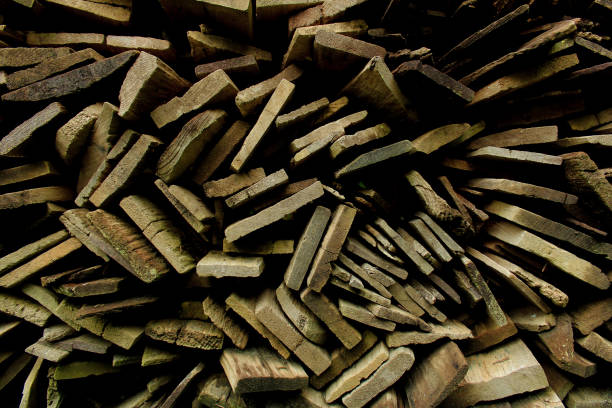
Start by gathering scrap wood. This can be pieces from an old pallet, broken furniture, or even a discarded shelf. You do not need a workshop or power tools. A handsaw, a hammer, a handful of nails, and some sandpaper are enough. If you have a drill, you can add a round hole for the bird entrance, but you can also cut a simple square opening with a saw. The point is not to replicate a perfect blueprint; the point is to make decisions on the fly. How big should the box be? Should it lean forward or backward? What about a perch? These questions force your brain to solve real, physical problems. You are not thinking about your to-do list or your creative block. You are thinking about how to fit a roof onto a box without splitting the nails.
The beauty of a low-stakes project like this is that every mistake becomes a design feature. If the roof does not align properly, you can call it a rustic overhang. If the walls are uneven, the house has character. If you accidentally hammer a nail through the side, you can fill the hole with wood glue or simply call it a ventilation slot. This mindset is exactly what you need to break out of a creative rut. In professional work, mistakes are costly and embarrassing. In a scrap-wood birdhouse, mistakes are just unexpected choices. You learn to adapt, to improvise, and to accept imperfection. Those skills transfer directly to writing, design, music, or any other creative field.
Do not worry about the final result. In fact, the best outcome is an ugly birdhouse that you leave in the yard for a few weeks. It will weather, warp, and possibly collapse. That is fine. The goal was not to create a permanent structure. The goal was to enter a state of flow where time disappears and your hands are busy while your mind wanders. That wandering is where new ideas germinate. Many graphic designers, architects, and writers keep a pile of scrap wood in their garage for exactly this reason. They build something purely for the sake of building. The activity serves as a mental reset.
You can also treat the birdhouse as a sandbox for experimentation. Try attaching pieces of bark to the roof. Paint it with leftover house paint in a wild color. Use a screw instead of a nail and see how it changes the feel. Add a small platform for a bird feeder. None of these decisions have consequences. No client will reject your work. No audience will judge it. You are free to follow your intuition, even if it fails. That freedom is rare in adult life, and it is the lifeblood of creativity.
If you do not have scrap wood, you can substitute cardboard, foam core, or even old plastic containers. The material does not matter. The act of constructing something from nothing with no expectations does matter. After you finish, do not evaluate it. Do not compare it to online tutorials. Just put it somewhere and move on to your next low-stakes project. Maybe next time you build a kite from newspaper strips. Or you make a simple terrarium from a jam jar. The key is to keep the stakes low enough that you will actually start.
Creative people often talk about the fear of the blank page. That fear is simply the imagined weight of a perfect result. Scrap wood eliminates the blank page. There is no white paper, no empty canvas. There is only a pile of crooked boards that already look like a mess. Improving a mess is easy. Creating perfection is impossible. So pick up a hammer, find some nails, and build something that does not have to be good. You will be surprised how much good comes out of it.
Articles